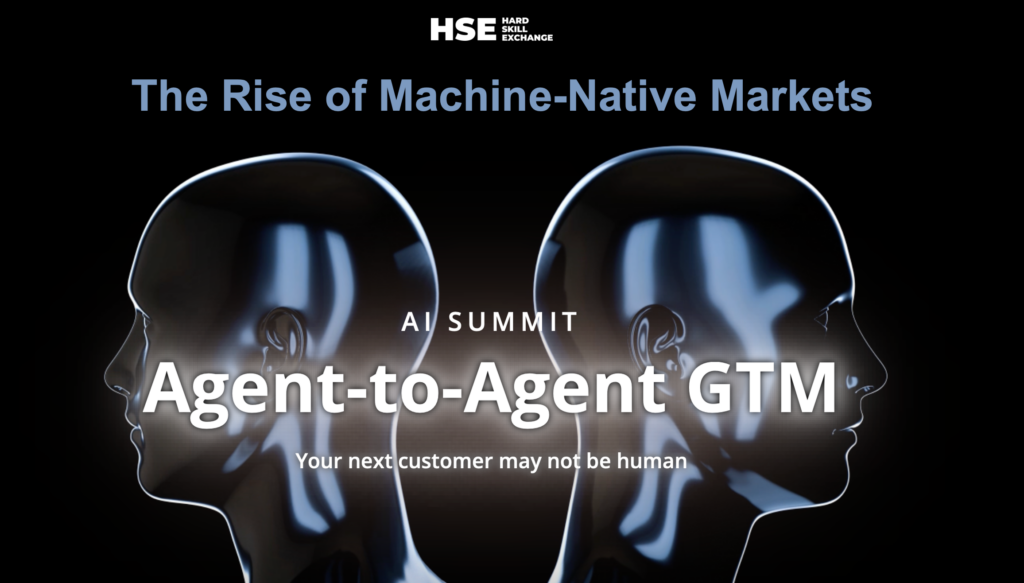
The intelligent web is entering its next phase. AI systems are moving from reading and summarizing the internet to researching, deciding, transacting, and increasingly interacting with other agents. That changes what leaders have to design for now. At WP Engine’s DE{CODE}, I explored an idea that has been occupying a lot of my thinking lately: the intelligent web. We are redesigning the internet for two audiences at once, human beings and the AI systems increasingly acting on their behalf. Search is…
Stop Asking What AI Will Do to Us and Start Asking What We Can Do With It that makes us stronger 💪🦾
AI has a leadership problem. For the last few years, people have been told that AI is coming for their jobs, their careers, even their relevance. Then we act surprised when people respond with fear, anger, or outright rejection. I recently joined my new friend Cal Fussman to talk about why I believe this is a leadership failure, and why we still have an opportunity to change the future. I shared a moment that changed my own thinking. After listening to…
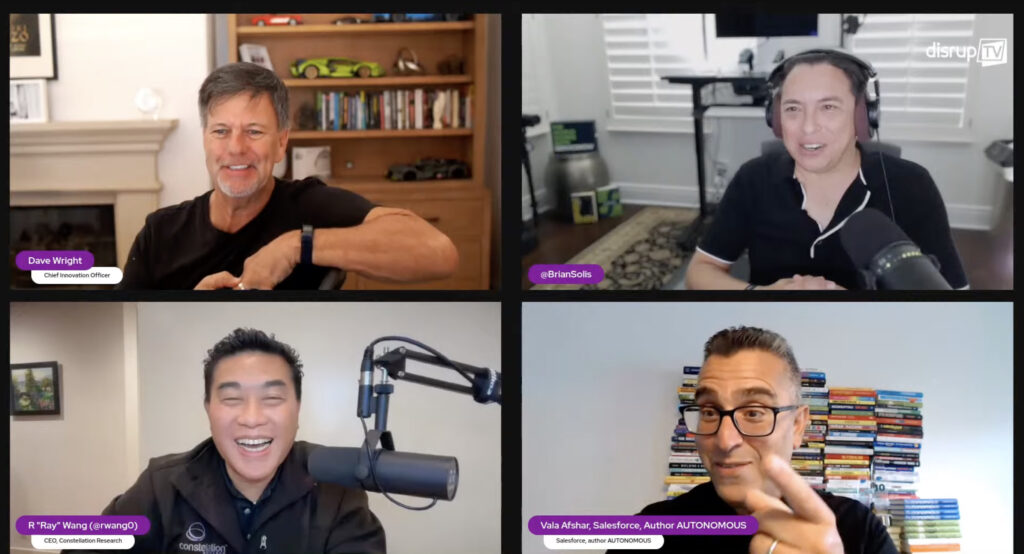
DisrupTV: AI Is Changing Business, the Bigger Opportunity Is to Reinvent It
AI is moving quickly into every corner of the enterprise. But I think we’re still asking questions that are far too small for the moment. How do we automate more? How do we increase productivity? How do we reduce costs? I recently joined Ray Wang and Vala Afshar on DisrupTV with my Infinite co-author and ServiceNow Chief Innovation Officer Dave Wright to explore a much bigger question: What would you build if AI gave you the opportunity to rethink the…
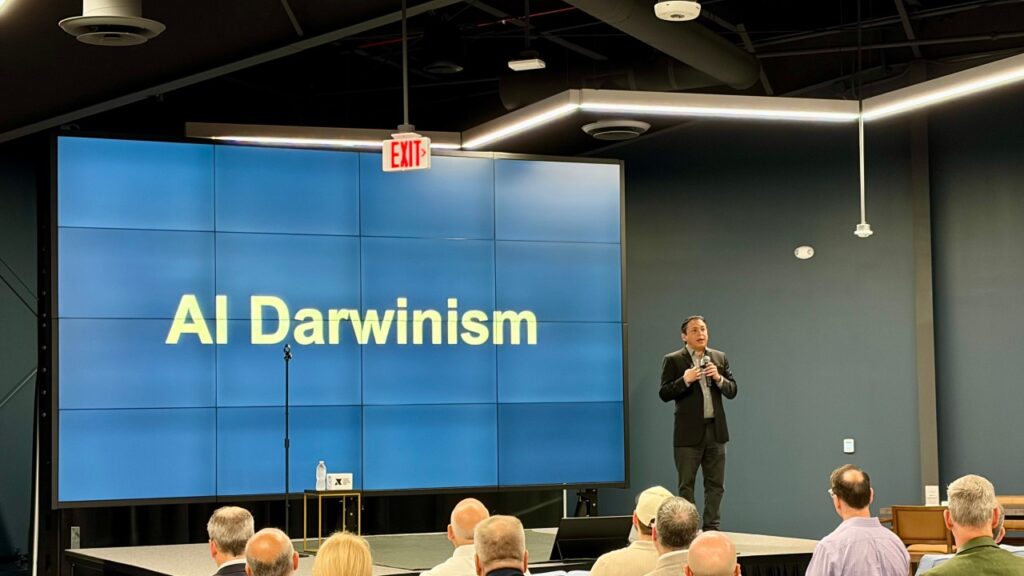
The AI Dilemma’s Innovator: Why AI Makes You Faster While Still Falling Behind
Every company is now asking some version of the same question…how do we use AI to become more efficient? It’s the right question. But it’s not the only question. If we use AI only to automate existing processes, reduce costs, and accelerate yesterday’s work, we may become faster versions of who we already were. That might improve productivity, but it won’t guarantee relevance. The bigger opportunity is to use AI to challenge the assumptions that define the business itself: what…
AI Is Changing How We Think, Work, and Lead; What We Do Next Is Up to Us
I’ve spent much of my career studying how technology changes people and how those changes eventually reshape markets, organizations, and culture (or how it needs to). AI is accelerating and stressing that cycle in ways and speeds I have not seen before. This is why I keep one question close by. Are we using this moment to rethink what is possible, or merely to make what already exists faster, cheaper, or more efficient? It’s something to think about… When the…
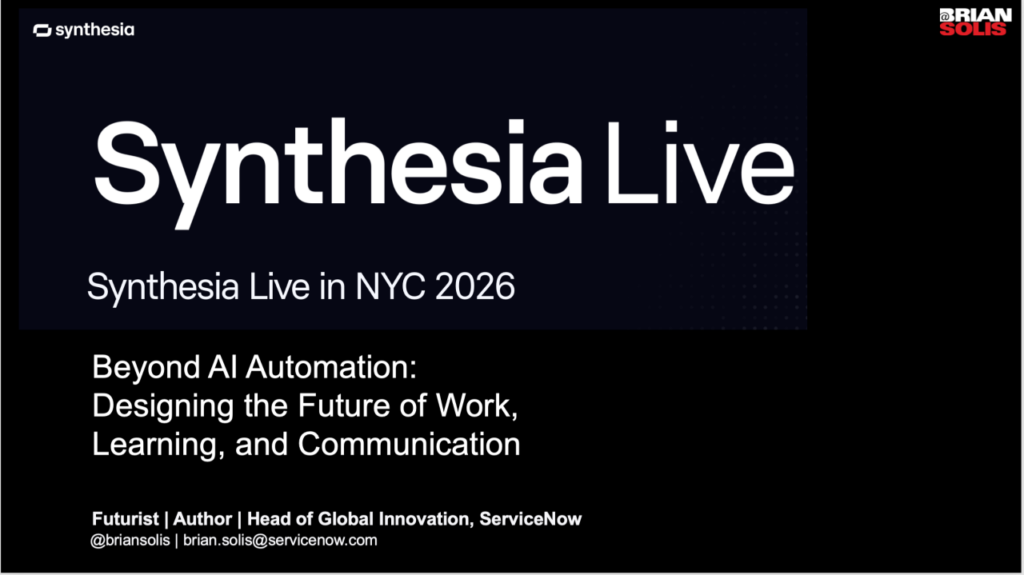
Beyond AI Automation: The Human Future of Work, Learning, and Communication
At Synthesia Live in New York, I had the privilege of closing a day dedicated to the future of AI video, learning, communication, and work. By the time I walked on stage, the audience had already heard amazing speakers, seen compelling demos, and explored what happens when AI powered avatars and videos becomes something more dynamic, adaptive, and personal for customers and employees. So I didn’t want to give another “AI is changing everything” talk. (Full talk at the end)…
The Web Has a New User: AI
For decades, we built the web for people. Now, AI is becoming a user too. It searches, reads, compares, summarizes, recommends, and increasingly acts on our behalf. That means the web is no longer just a collection of destinations for humans. It is becoming an intelligent layer where machines help decide what gets discovered, trusted, chosen, and acted upon. This is a much bigger shift than AI-generated content or the future of search. The web itself is changing. And as…
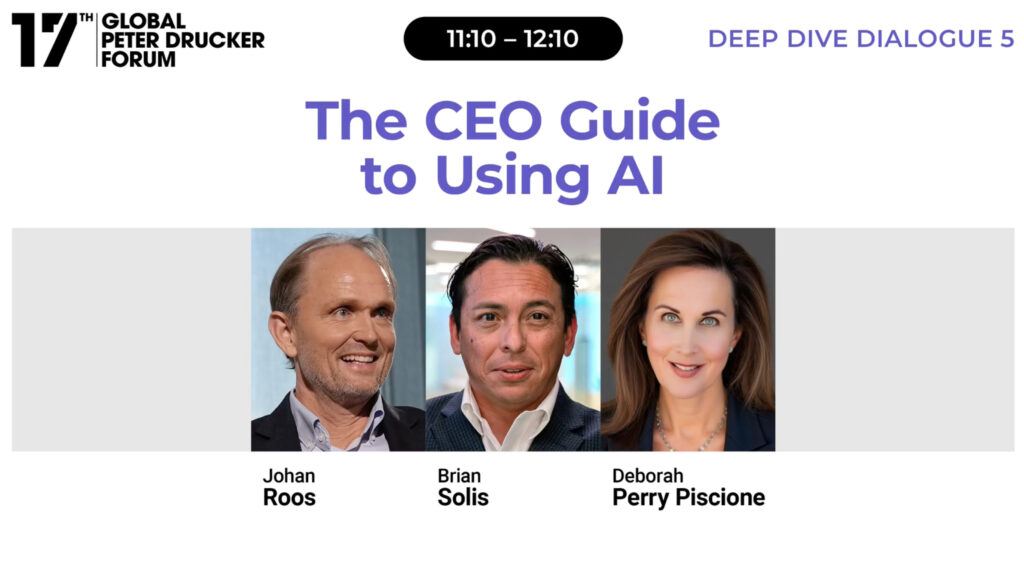
The CEO Guide to Using AI: Don’t Automate Your Way Out of the Future
It was an honor to join Johan Roos and Deborah Perry Piscione at the 17th Global Peter Drucker Forum for a session with a title that left little room for abstraction: “The CEO Guide to Using AI.” Johan is a respected management scholar, educator, author, and longtime contributor to the Drucker Forum. Deborah is a Silicon Valley entrepreneur, investor, and author studying how AI, robotics, and other disruptive technologies are reshaping employment and society. I joined them as a practicing…
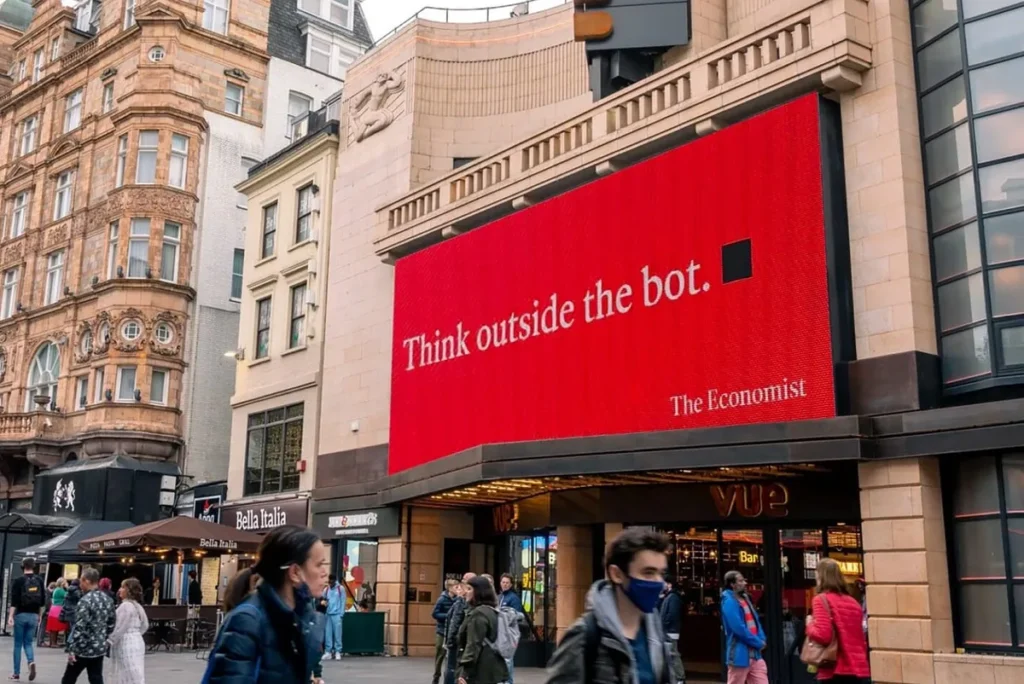
We Gave Technology Our Attention, Are We About to Give AI Our Minds?
It had to be the algorithm. After I received a note online from a friend who asked me why Dave Wright and I wrote the book Infinite “when no one is reading books anymore.” Shortly thereafter, I stumbled upon an article in The Atlantic that made me moue (had to look it up to describe the facial reaction I had to the headline), “The End of Reading is Here.” Then the next day, I posted a video that showcased the…
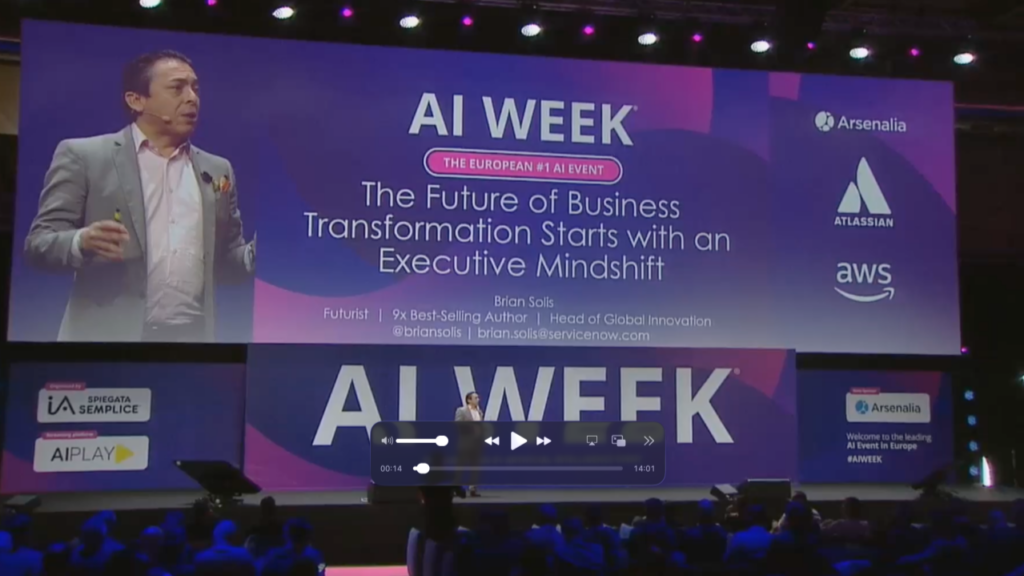
The AI-Powered Status Quo: AI Transformation is a Test of Leadership
At AI Week in Milan, I had the privilege of representing ServiceNow on a stage filled with people thinking seriously about the future of artificial intelligence. Rather than offer another tour of tools, trends, and predictions, I wanted to challenge the premise guiding much of today’s enterprise investment: that applying AI to the existing business is the same as transforming it. It isn’t. Most organizations are using AI to accelerate processes, automate tasks, increase output, and extract efficiencies from operating…