![A Guided Tour of Apple’s Vision Pro and a Glimpse of the Future of [Spatial] Computing](https://briansolis.com/wp-content/uploads/2024/01/VisionPro-2023.jpeg)
Apple finally released its long-awaited Vision Pro for pre-order today. At launch time, Apple also released a guided tour video that offers a glimpse of spatial computing and the new dimension of immersive experiences it introduces. Here are the key moments to focus on to appreciate what makes Vision Pro a game-changer. What we’re witnessing is a new future of computing, connectivity, entertainment, communication, and how we interact with digital and the physical space around us. 1) You’ll notice the…

AInsights: Anthropic Funding, Midjourney Antifunding, Rabbit R1 Sellout Debut, and Microsoft Copilot’s Takeoff
AInsights: Generative insights in AI. This series rapid fire series offers executive level AInsights into the rapidly shifting landscape of generative AI. OpenAI rival Anthropic in talks to raise $750 million led by Menlo Ventures Anthropic, an OpenAI rival founded by ex-OpenAI employees, is in talks to raise a $750 million funding round led by Menlo Ventures at a valuation of ~$18 billion — nearly 4.5 times the startup’s $4.1 billion valuation earlier this year. This approach keeps new players…
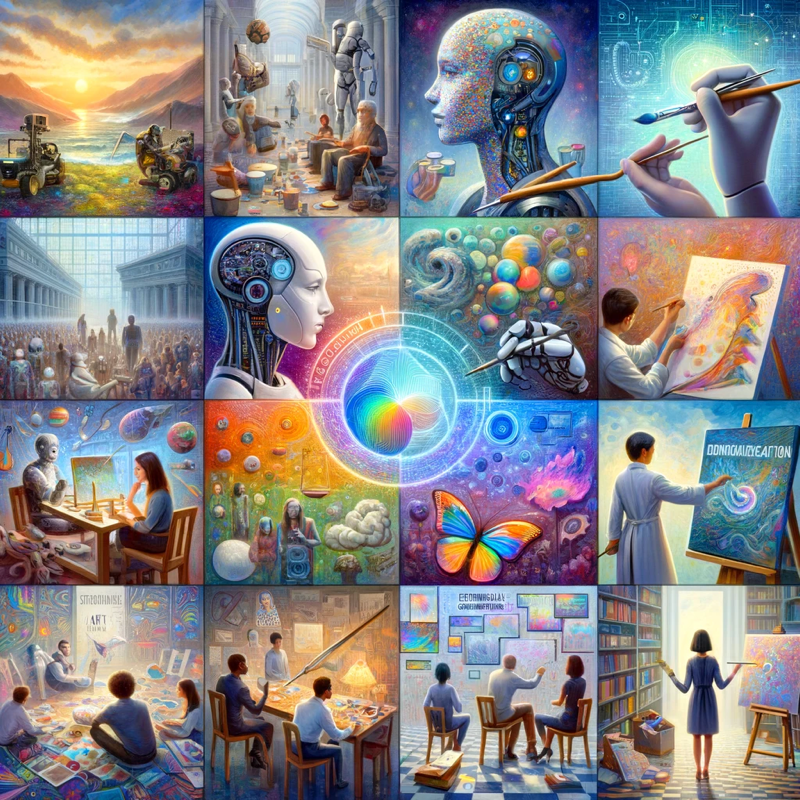
Generative Insights in AI: GPTs, AI Influencers, Digital Twins, Microsoft, Perplexity’s Google Killer?
An evolving name for an evolving landscape. This online series rapid fire updates is meant to bring meaning to the rapidly changing landscape of generative AI. Prompt: What are the developments in generative AI? Please only include the updates that represent significant shifts in technology, market, and behavioral shifts. Summarize those trends in what they mean for executives, leaders, and decision makers. I don’t have enough time to read and process everything. OpenAI has its App Store moment and focuses…
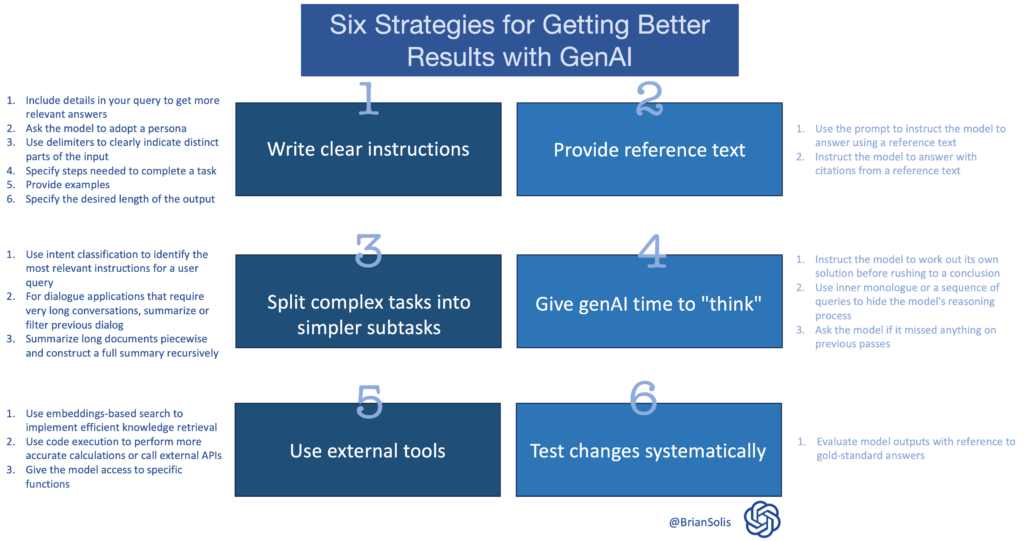
AInsights: Prompt Engineering: Six Strategies for Getting Better Results
AInsights: Executive-level insights on the latest in generative AI… OpenAI released a reference guide to improve results from ChatGPT or any generative AI platform. These methods aren’t mutually exclusive. You can use many of them in combination for greater effect. The point is, experiment! To help, I captured the high level prompts and each series of supporting pillars in a simple infographic. You can download it here. 1) Write clear instructions These models can’t read your mind. If outputs are…
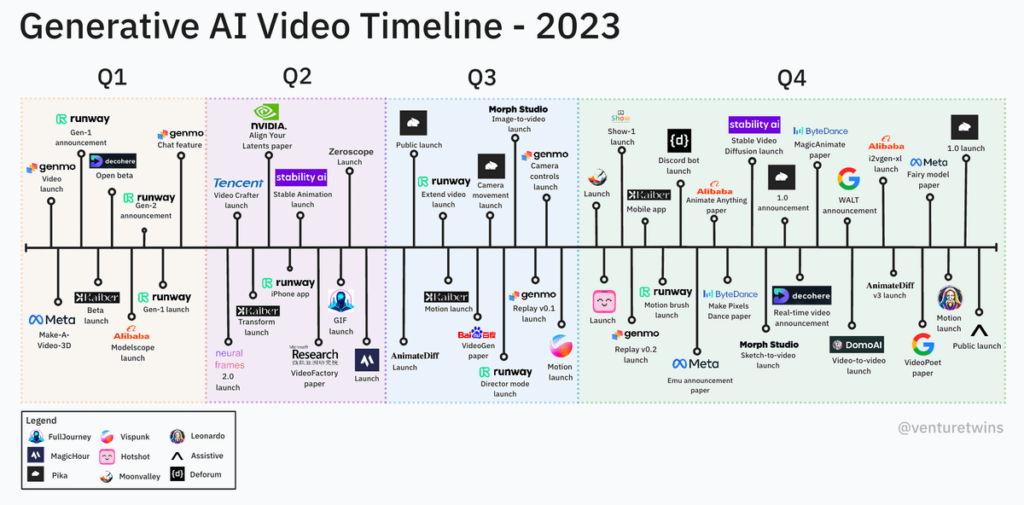
Generative Insights in AI: A Generative AI Video Timeline of the Top Players
Shortly before the shift from 2023 to 2024, Justine Moore, partner at a16z, published a insightful thread 🧵 that explores the evolution of generative AI video and her take on its state and near-term future. So, what’s next for AI video? First of all, it’s a runaway category as pictured in Moore’s timeline. She is already tracking 21 promising players that have emerged in just one year, not including the array of up-and-coming startups not included in her list In…

How to Innovate The Human Experience
I joined Susan Lindner on her popular podcast, “Innovation Storytellers.” The episode is live and I’d love for you to hear it. We explore how to innovate the human experience. And, it’s only 23 minutes… 127: How to Innovate The Human Experience In this compelling episode of Innovation Storytellers Show, I am joined by Brian Solis, the Head of Global Innovation at ServiceNow. If you’ve ever been fascinated by how technology serves as a catalyst for business transformation, then this…

2024 is Expected to Be the Year of Drone Delivery
UPDATED 2024 is expected to be the year when drone delivery finally takes flight. What’s different about this year? Well, most regulatory hurdles have been cleared, opening the door for retailers, medical centers, and logistics platforms to start offering drone delivery. During testing, visual spotters were required every mile. Last Fall, the FAA authorized some drone operators to fly BVLOS (beyond visual line of sight). Now, companies such as Zipline, Wing, DroneUp, and Amazon are about to take off. The…

Generative Developments in AI: Google Cuts, Expected Industry Cuts, GenAI’s $1 Trillion Trajectory
The latest in AI trends… Google is expected to make dramatic cuts due to AI The Information is reporting that Google is exploring a substantial workforce reduction, potentially affecting up to 30,000 employees. This is reportedly aimed at sales as Google’s own AI is expected to disrupt its Ads and Adwords business. AI may affect more jobs beyond Google Newsweek is reporting that cuts are likely across the board as companies consider AI and a potential recession. According to a…

The Four Waves of Generative AI, We’re in Wave 2 According to Mustafa Suleyman
ChatGPT was the fastest technology to reach 100 million users. In 2022 – 2023, ChatGPT almost single-handedly changed the trajectory of mainstream computing and how people interact with information. Suddenly everyday users could shift between consuming and co-creating data with the assistance of generative AI tools. Though it had been evolving for years, OpenAI captured the zeitgeist with ChatGPT, and everything changed from there. Now in 2024, we’ll see a shift from curiosity to strategic execution. Generative AI will get…
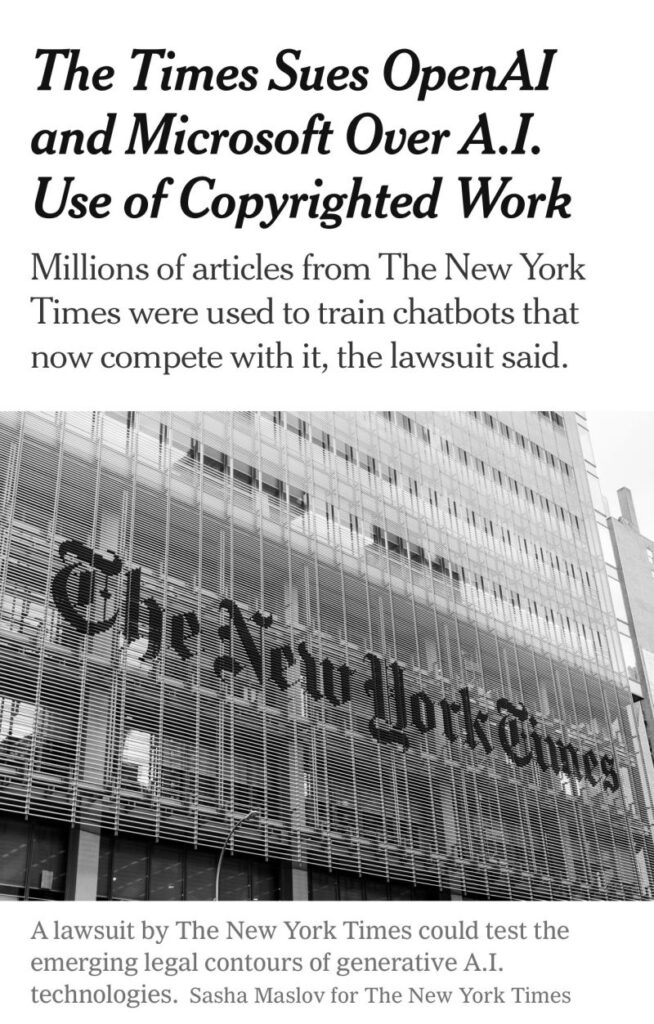
Generative Developments in AI: NY Times Sues OpenAI and Next-Gen AI Devices
The latest news and trends in generative AI… The Future of Generative AI Headed to Court The New York Times is suing OpenAI for using copyrighted IP to train its LLMs without credit or royalties. This could be OpenAI’s “Napster” moment. Here’s the filing. At the same time, Apple is reportedly striking deals with media companies to train its AI using IP. One of these two will define the future of generative AI. A New Wave of AI Devices and…