The latest in AI trends… Google is expected to make dramatic cuts due to AI The Information is reporting that Google is exploring a substantial workforce reduction, potentially affecting up to 30,000 employees. This is reportedly aimed at sales as Google’s own AI is expected to disrupt its Ads and Adwords business. AI may affect more jobs beyond Google Newsweek is reporting that cuts are likely across the board as companies consider AI and a potential recession. According to a…

The Four Waves of Generative AI, We’re in Wave 2 According to Mustafa Suleyman
ChatGPT was the fastest technology to reach 100 million users. In 2022 – 2023, ChatGPT almost single-handedly changed the trajectory of mainstream computing and how people interact with information. Suddenly everyday users could shift between consuming and co-creating data with the assistance of generative AI tools. Though it had been evolving for years, OpenAI captured the zeitgeist with ChatGPT, and everything changed from there. Now in 2024, we’ll see a shift from curiosity to strategic execution. Generative AI will get…
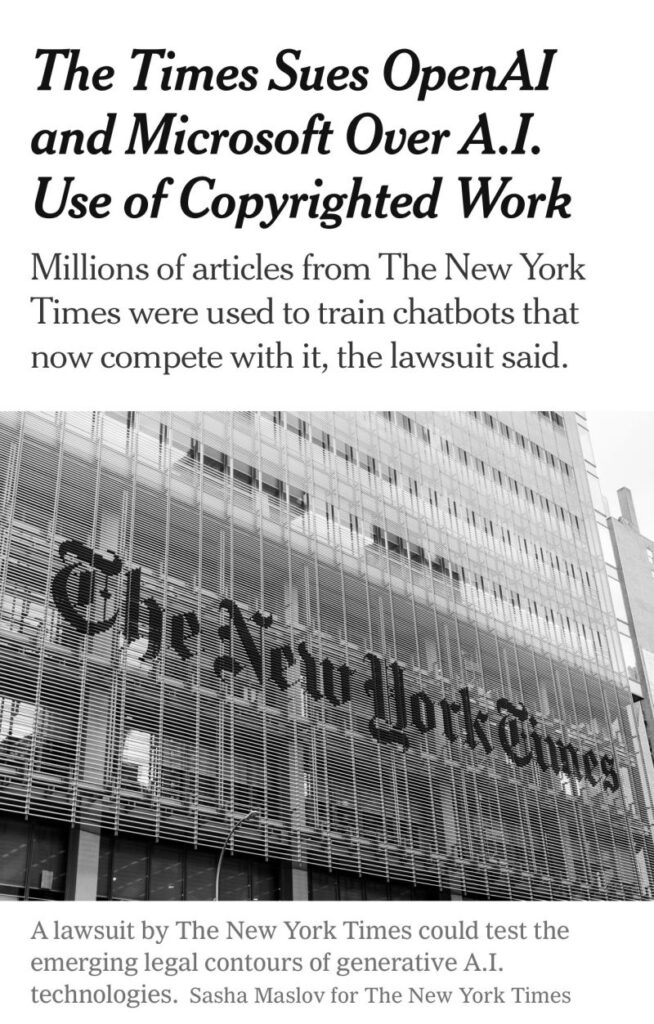
Generative Developments in AI: NY Times Sues OpenAI and Next-Gen AI Devices
The latest news and trends in generative AI… The Future of Generative AI Headed to Court The New York Times is suing OpenAI for using copyrighted IP to train its LLMs without credit or royalties. This could be OpenAI’s “Napster” moment. Here’s the filing. At the same time, Apple is reportedly striking deals with media companies to train its AI using IP. One of these two will define the future of generative AI. A New Wave of AI Devices and…
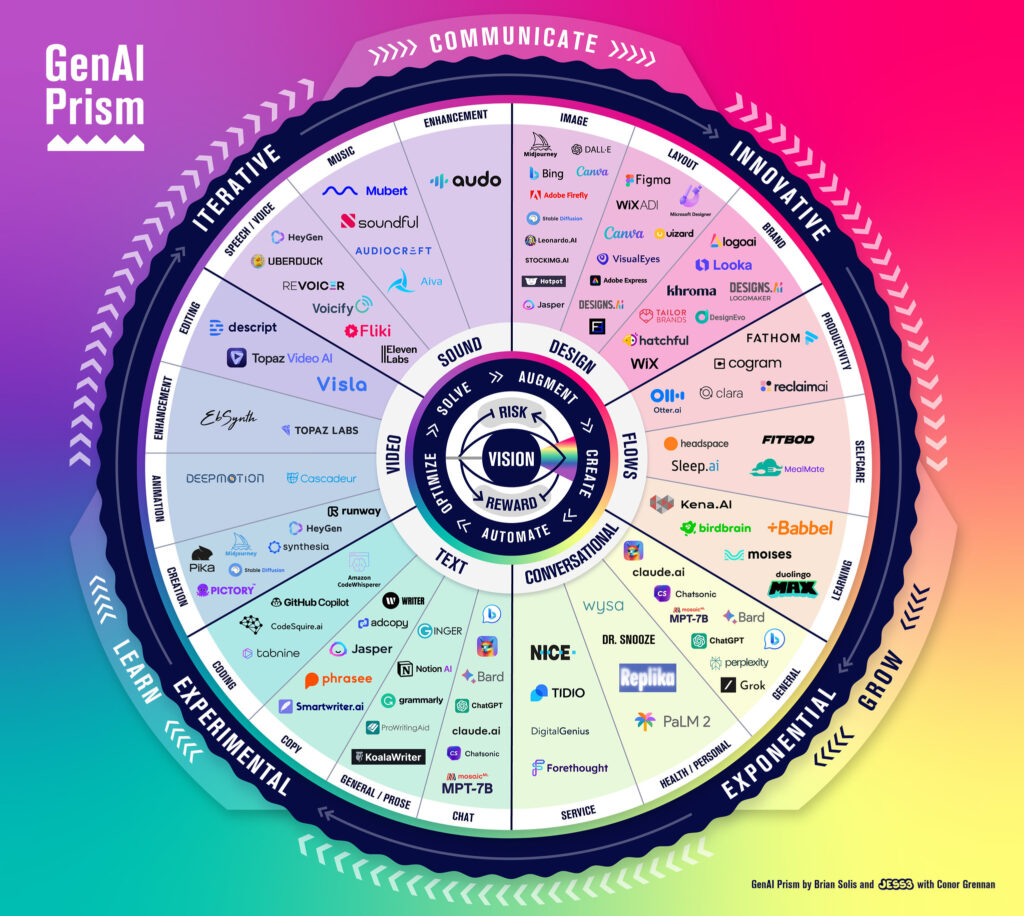
Introducing the GenAI Prism Infographic: A Framework for Collaborating with Generative AI
NEWS: Introducing the The GenAI Prism, the single most comprehensive representation of the generative AI universe. JESS3 design studio and Brian Solis, digital futurist and best-selling author, announced the release of the GenAI Prism v1.0 infographic along with Conor Grennan, leading generative AI expert and Dean of Students/Head of GenerativeAI at NYU Stern School of Business. Jeremiah Owyang, Venture Capital Investor at Blitzscaling Ventures, and my friend and former colleague, shared an observation that there are more than 10,000 generative…
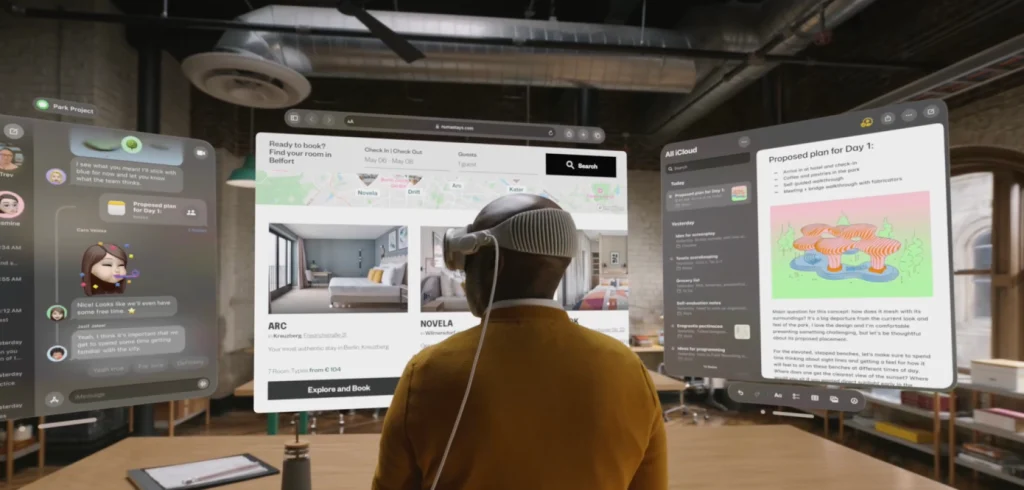
On the Futurists: Apple’s Vision Pro is Definitely Going to Usher in the Era of Spatial Computing
If you want an opinion on Apple’s Vision Pro and the promise of Spatial Computing, you can ask any expert. You’ll get plenty of thoughts and predictions. However, if you want a perspective based on a first-hand experience of actually using the Vision Pro and immersing themselves in an alternate plane between mobile, traditional computing, and the real world, well, here you go. In this special episode of The Futurists, Brett King, Robert Tercek, Miss Metaverse, and I interview Brian…
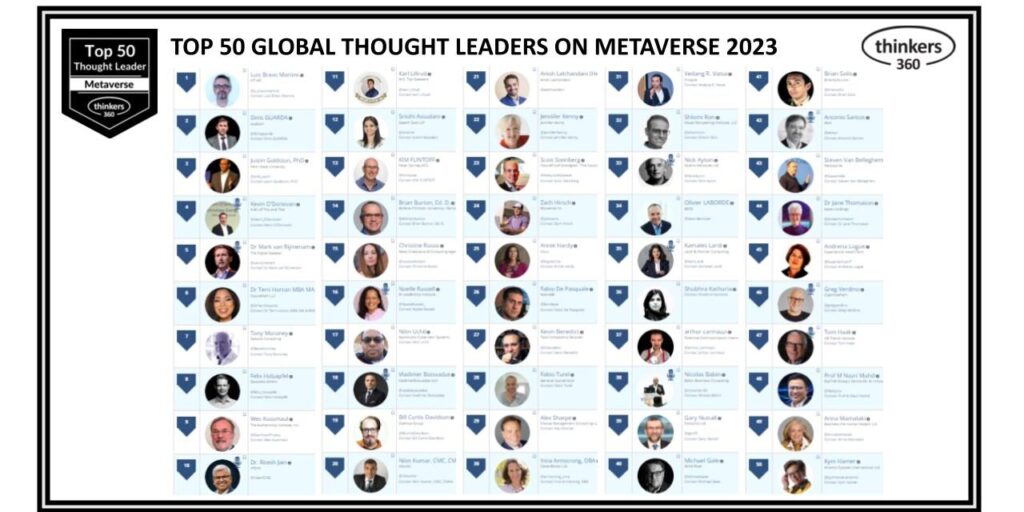
Thinkers 360 Ranks Brian Solis in Top 50 Metaverse Thought Leaders List
The metaverse isn’t dead, it’s barely even born. Thinkers 360 announced its 2023 annual ranking of metaverse thought leaders, “Metaverse Experts 50,” and Brian Solis was listed among other incredible thought leaders. Here are some of Brian’s POVs to help you think about the bridge between a 2D to 3D to immersive/spatial web to a metaverse. Exploring the business promise of the metaverse – McKinsey Why Web 3.0 will rewrite the concept of marketing – CMO The Business Case For…
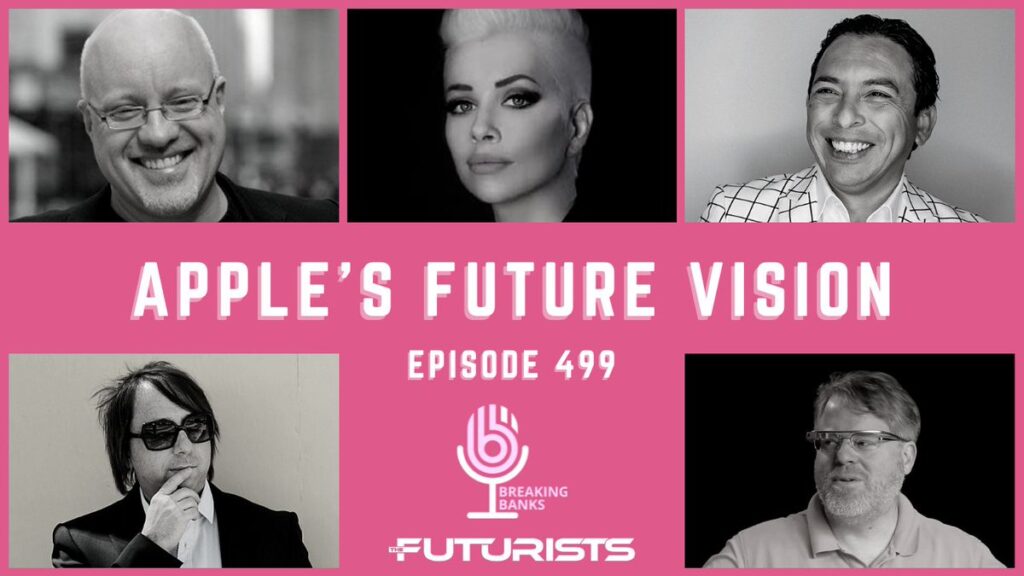
The Futurists: The Future of Apple’s Vision Pro and Spatial Computing
What’s it like to wear Apple’s Vision Pro mixed reality headset? This week on The Futurists, hosts Brett King, Katie King, and Brian Solis are joined by the dynamic duo of Robert Scoble and Brian Roemmele, both highly regarded futurists as we dive into the implications of Apple’s Vision Pro. Roemmele was at Apple’s launch event and was one of the lucky few to experience Apple’s inaugural take on augmented reality and virtual reality. We also explore spatial computing and…
How to Future-Proof Your Business Career Against AI Disruption
It was inevitable… According to Bloomberg, IBM expects to pause hiring for roles as roughly 7,800 jobs could be replaced by #AI. IBM’s Chief Executive Officer Arvind Krishna said back-office functions, such as human resources, will be suspended or slowed. “These non-customer-facing roles amount to roughly 26,000 workers,” Krishna said. “I could easily see 30% of that getting replaced by AI and automation over a five-year period.” This is the first of many announcements as organizations rethink work, resources, and…

Doing CX Right: AI and the Human Element – How to Strike a Balance in the Workplace
Looking to gain insight into the world of AI technology, innovation, and digital transformation? Then you’ve come to the right place. On this episode, you’ll learn actionable tips from Stacy Sherman and Brian Solis, world-renowned digital anthropologist, futurist, 8x best-selling author, speaker, and VP of Global Innovation at Salesforce. They share tactics for leveraging AI and related tech without losing the human element. And how to build better relationships, experiences, and business models, emphasizing the importance of companies adopting a customer-centric approach to…

Retail Therapy: At the forefront of digital transformation and customer experience with Paul Zahra, CEO of ARA
In this episode of Retail Therapy, we have the pleasure of hosting Brian Solis. Brian is a leading digital anthropologist and futurist, known for his expertise in digital transformation, customer experience, and innovation. He is currently the Global Innovation Evangelist at Salesforce, where he leverages his vast knowledge to drive thought leadership and research. Join host Paul Zahra, CEO of ARA, to delve into Brian’s unique perspectives on the ever-evolving retail industry. With over 700,000 followers on social media, Brian brings a…