
For the last three years, I’ve made it a point to attend Vidcon, even if that meant missing the prestigious Cannes Lions. Why? Because the roots of shifting consumer behavior, trust and influence are evident to those paying attention. For those who are tracking what’s next, the future of entertainment and engagement is taking shape online and live in Anaheim every summer. Thousands upon thousands of young adults, children and supportive parents convene upon Vidcon every year in the hopes…

Social media gave everyone a voice, on the other hand, it also gave everyone a voice
We live in a world where where information and misinformation is prevalent and weighted equally all too often. As human beings, we are learning how to use social media effectively to communicate and connect. At the same time, we’re drowning in abundance, complexity of choices and and unfortunately, the misappropriation or misdirection of influence. Concurrently in professional realms, many leadership teams are overwhelmed with trying to keep up with the sheer scope and scale of the digital evolution. For many…
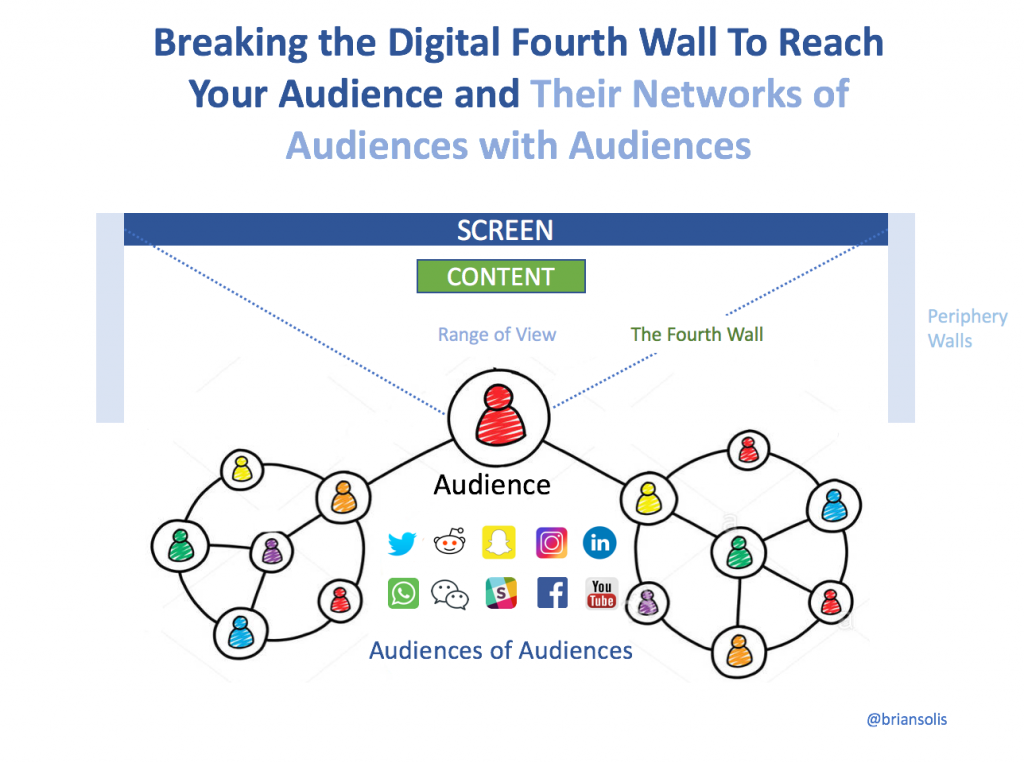
Breaking the Digital Fourth Wall Through Experiential Storytelling
The fourth wall is the space that separates a performer or performance from an audience. A character, actor, author or storyteller “breaks the fourth wall” when they address the audience directly. As an analyst, author, blogger, podcaster and creator, I am by default, in the content business. Dedicating time to produce my work matters not if no one happens upon it. But once someone discovers my work, it must convincingly pierce the fourth wall between the medium and them to…
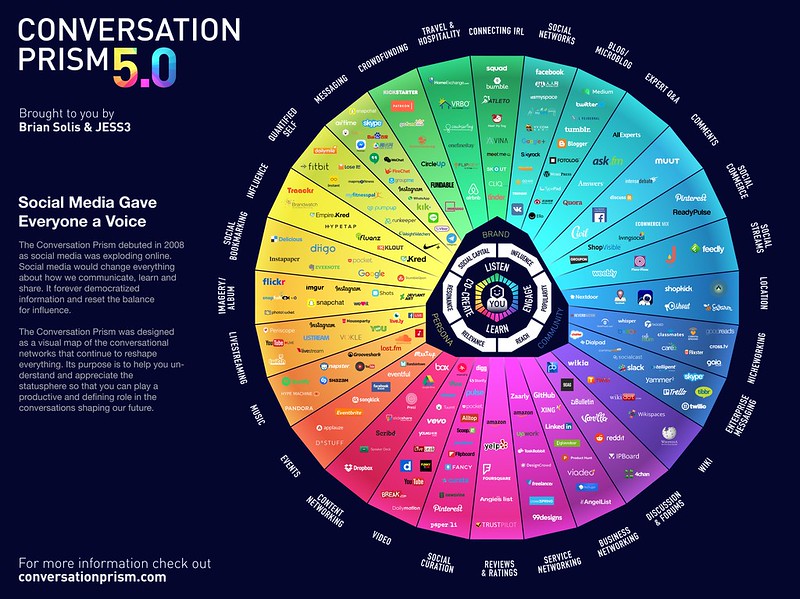
Conversation Prism 5.0: The 2017 Social Media Universe in One Infographic
Social media continues to reshape our world and how people connect, discover and share. While some argue that we should drop “social” from the moniker and simply call it “media,” the reality is that social media is only spreading, evolving and becoming more pervasive in our life and work. Every few years, I partner with JESS3 to capture the state of social media visually. The challenge is always great in that social networks and apps come and go, but over…
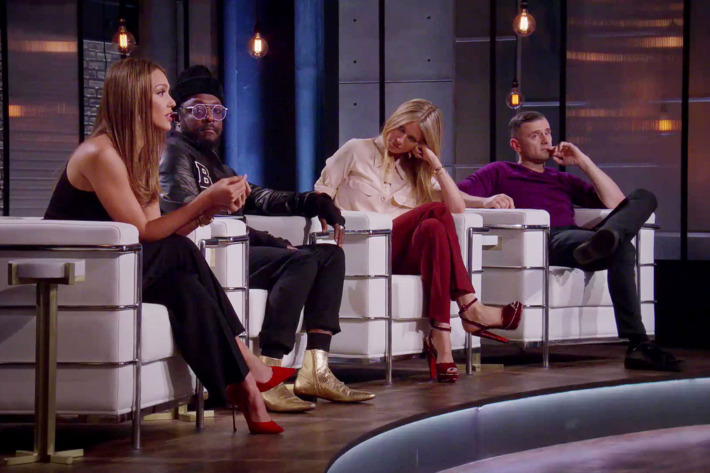
I was supposed to write about Apple’s new show ‘Planet of the Apps,’ Instead, I wrote about @GaryVee
This post started as a review of the new show on Apple Music, “Planet of the Apps.” I realized the world didn’t need another announcement or review of the show. What I will say is this, any show that aims to help entrepreneurs bring their ideas to life and also transform them into budding businesses that change the world is important. The show features Jessica Alba, Gwyneth Paltrow, will.i.am and Gary Vaynerchuk. I’ve had the privilege of working with this crew (except…
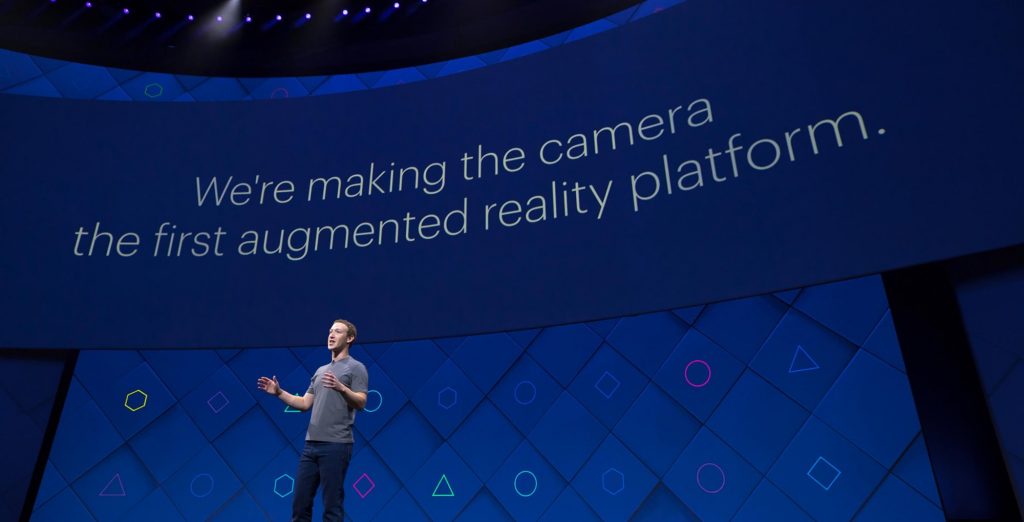
Facebook is Becoming a Social Operating System for Human Beings and Robots
At f8 2017, Facebook aims to become your social network for reality, augmented reality and virtual reality…really. In the heart of Silicon Valley, Facebook once again hosted its highly-anticipated developer conference, which, for the record, appeals to anyone who follows, designs for, or uses the world’s largest social network. Drawing an estimated 4,000 attendees from all around the world, Facebook’s news blurred the line between reality and virtual reality and human and robot engagement for users in their personal and…
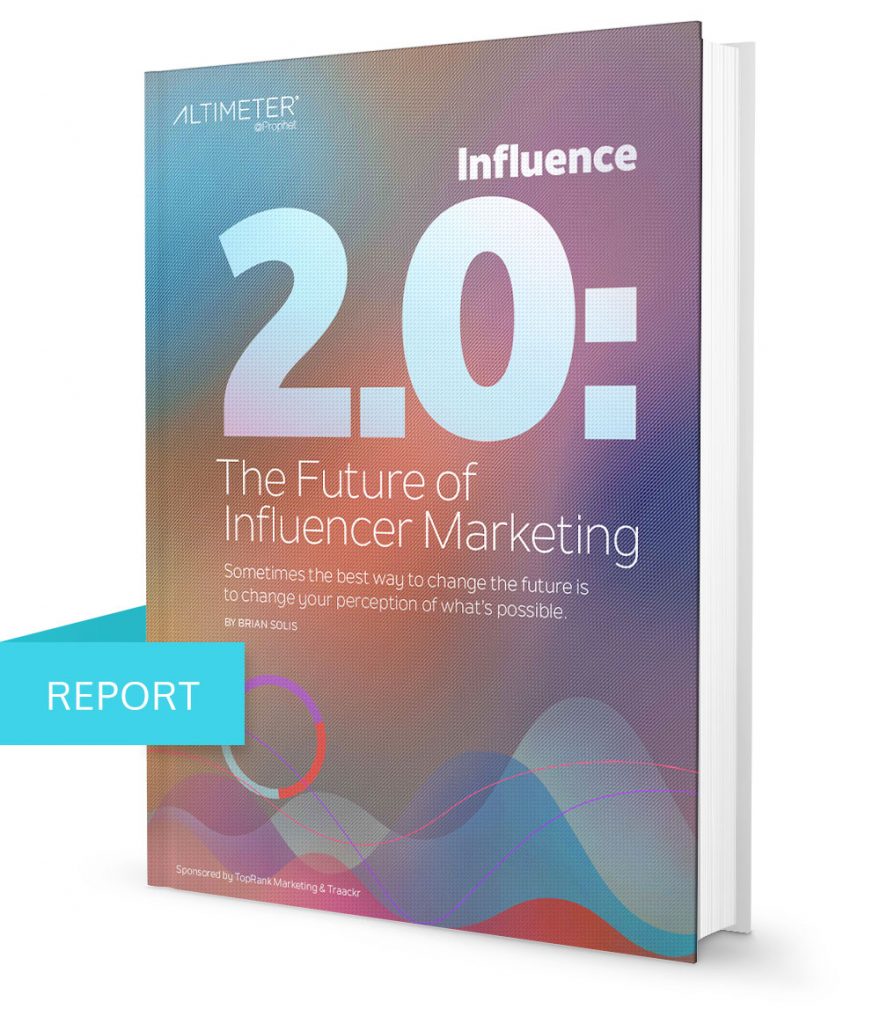
What is Influence 2.0 and why is it important in the future of CX?
Before social media, before modern digital marketing and before DCX and digital transformation, I spent much of the late 90s and early 2000s studying and experimenting with online influence. In February of 1999, I opened a lab to test and learn and in the process, was one of the many contributors to shape the future of digital marketing and customer engagement. Shortly after joining Altimeter Group in 2012, I shared all of the research I had collected and more and published…
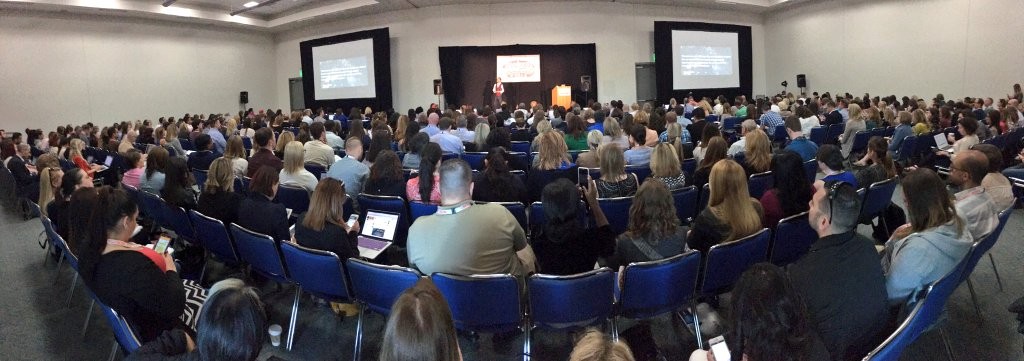
We all talk of innovation, but few us start with innovation in our own work
Photo Credit: Brian Fanzo I don’t normally share things like this, but…I’ve had a heck of a week. On Monday, I released what I would consider my most significant research to date on the subject of digital transformation, “The Race Against Digital Darwinism: Six Stages of Digital Transformation.” I also spent traveled to San Diego (SMMW), Las Vegas (SAS) and Huntington Beach (WCPRSA). Not the most extreme mileage in comparison to previous trips, but each event, was in its own way, unforgettable….
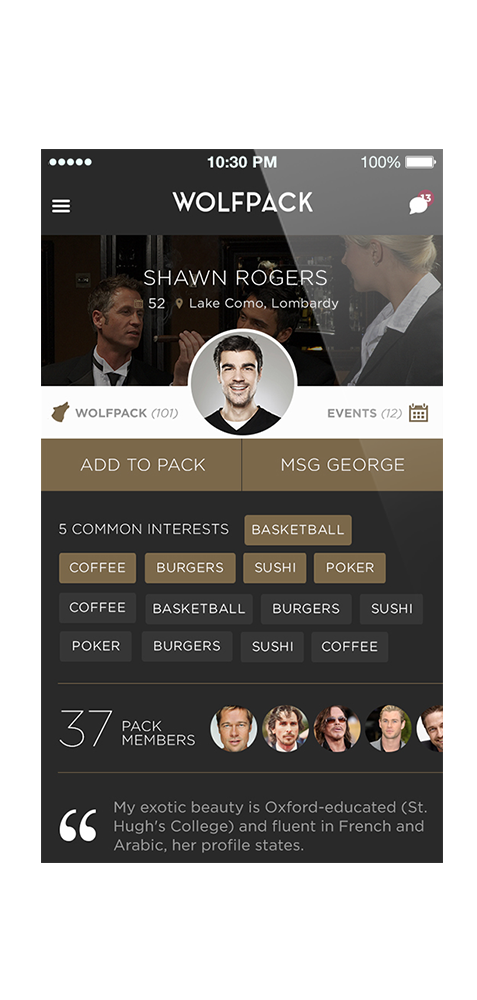
Wolfpack App is a Mobile Social Nichework for Guys to be Guys – Is this the Dawn of Social Nicheworks?
I thought I’d seen it all. Wolfpack app is a new mobile-centered, social network that helps guys connect with like-minded buddies around interests and events. When the news of Wolfpack’s debut landed in my inbox, I initially disregarded it as yet another “bro” app. I live in Silicon Valley where bro culture is a widely recognized problem. Too many of these bros after all are blamed for the lack of diversity and respect in startups among many other things that…

The New Peeple App Does Not Represent People; Stop This App Before It’s Released
“Character is destiny.” This is the ironic tagline for Peeple (I’m not linking to it), a new app that wants to be the “Yelp for people” allowing anyone to rate you “professionally, personally and romantically” as long as they have 1) a Facebook account, 2) your phone number and 3) that they’re a real person. I’m not kidding. This is a real app that is one-to-two months away from impacting your social, professional and dating graphs all because two…