Studying the impact of innovation on business and society


About Brian
"A world's top superforecaster." – Entrepreneur
"One of the more creative and brilliant business minds of our time." – Forbes
“One of the greatest digital analysts of our time.” – Antonio Lucio, CMO, HP
"Top futurist speaker." – ReadWrite
“One of the 21st century business world’s leading thinkers.” – ZDNet
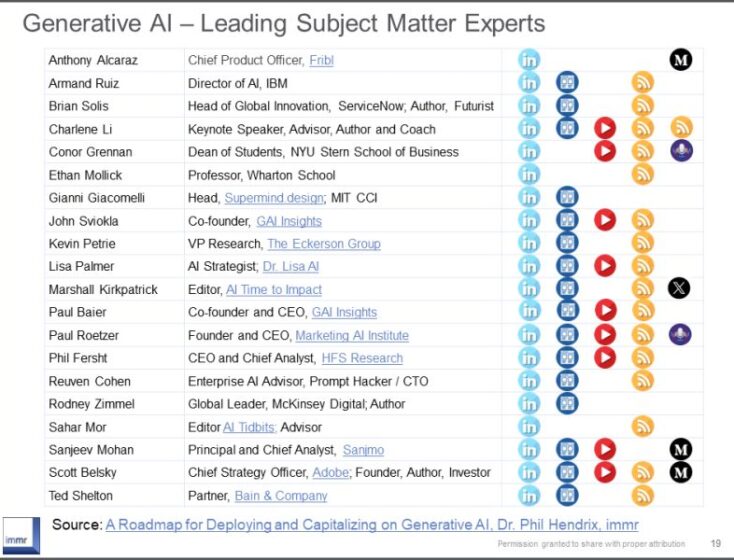
"One of the Top 20 Must Follow Thought Leaders in Generative AI" – IMMR
"One of the ‘top 10 people to know in Silicon Valley." – Huffpost
"The futurist we all need now." – The Conference Board
"6 Business Speakers Who Will Motivate Your Teams With Their Real-Life Experiences" – GRIT DAILY
Brian Solis is a world-renowned digital anthropologist and futurist. He is also an award-winning author and global keynote speaker. Brian’s research, advisory and presentations humanize disruptive trends and technologies and their impact businesses, markets, and societies. He not only helps audiences understand what’s happening and why, he explains complex subject in a way that everyone can understand. He then visualizes future opportunities and inspires people to take leading roles in defining the future they want to see.
His work focuses on advisory, thought leadership, research that explores leadership 2.0, digital and business transformation, innovation, experience innovation CX/UX, disruptive technologies (AR/VR, AI, web3, NFTs, metaverse, mobile-first), the future of work and employee experience, and the self-driving enterprise.
He has advised leading brands, celebrities, and startups and his ideas and work are consistently featured in the press. He’s a regular contributor to leading business and industry publications including Forbes, Harvard Business Review, CMO.com, TheNextWeb, Adweek, among others. Brian is also an official LinkedIn Influencer. His work is followed by over 700,000 people across social media.
Leading Analyst and
Strategic Advisor
Always plugged into the future of innovation and market evolution, Brian advises executives, technology vendors, start ups and boards of directors. He also develops internal/external research, roadmapping and analysis programs, hosts custom workshops and speaks at executive, partner and employee events.
International
Keynote Speaker
A sought-after international speaker, Solis shares his vision to inspire next-level leadership and business innovation around the world. His talks include digital transformation, innovation and disruption, modern consumerism, culture and employee experience and digital societies.
Influencer/
Content Strategy
Brian partners with brands and technology vendors on custom content and influencer strategies. His award-winning services include co-branded research and thought leadership reports, original content and media, webinars/webcasts, amplification programs for trends, products and events, and much more.
Award Winning
Author
An 8x best-selling author, Brian’s books include, Lifescale: How to Live a More Creative, Productive and Happy Life, X: The Experience When Business Meets Design, What’s the Future of Business (WTF), and The End of Business as Usual (a top 10 Business Book by Publisher’s Weekly)
The Latest Posts
- Brian Solis / Disruptive Technology, Innovation, Leadership
AInsights: The Future of Google Search Ain't What It Used To Be; The Rise of Ignite Moments
AInsights: Executive-level insights on the latest in generative AI…subscribe here. Google is exploring options to charge for “premium” fea...
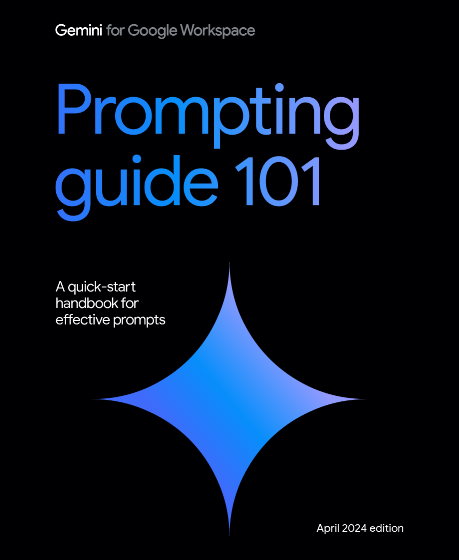
Brian Solis / Disruptive Technology, Innovation, LeadershipAInsights: Google Released a Prompting Guide 101 to Advance GenAI Prompting Skills and Outcomes
AInsights: Executive-level insights on the latest in generative AI…subscribe here. Google released a “prompt guide” for Gemini in Google W...
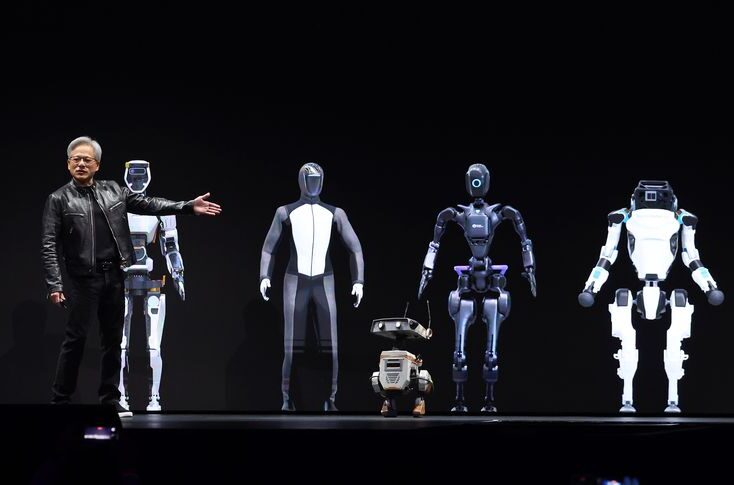
Brian Solis / Disruptive Technology, Innovation, LeadershipAInsights: Nvidia's Advancements in AI Compute, AI-Powered Humanoid Robots, and Connecting Omniverse to Apple's Vision Pro
AInsights: Executive-level insights on the latest in generative AI…subscribe here. Nvidia accelerates its foray into the future of AI and robotics at ...
- Brian Solis / Disruptive Technology, Future of Work
Generative AI Prompting: A Guide to Achieving Incredible and Fantastical Outcomes with GenAI
Is prompt engineering a passing fad? Will AI learn to prompt itself based on your desired outcome? Writing for Harvard Business Review, Oguz A. Acar b...
Brian Solis / Disruptive Technology, Innovation, LeadershipAInsights: AI will be Smarter Than Humans before 2030, So What?
AInsights: Executive-level insights on the latest in generative AI… As a keynote speaker, I engage with executives in every industry at varying levels...
Brian Solis / Leadership, Lifescale, Press, Social IssuesLessons Learned, Advice I Would Give Myself and Probably Ignore, and the Skills I'm Learning to Unlock the Next Phase of My Career
For those of you who followed my work over the years, thank you. 🙏 I’ve always been reluctant to pull the curtain back to tell my story....

Get Instant Access to Brian's Articles!
SUBSCRIBE NOWBrian in The News
- Brian Solis / Press
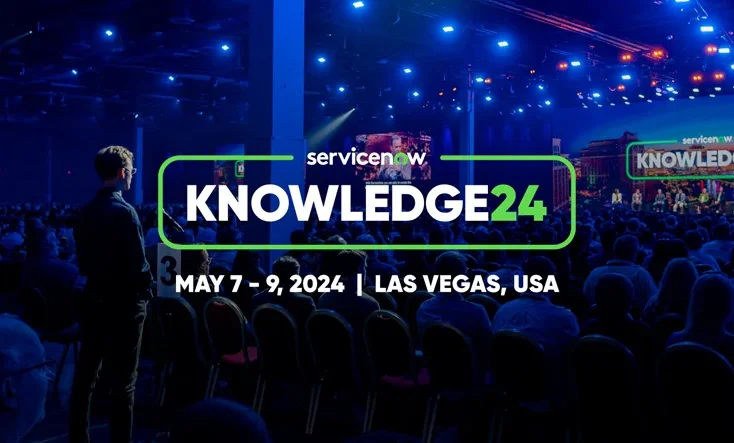
Think Big with AI! Join Me at ServiceNow's Knowledge 2024 in Las Vegas
I’m proud to announce that I’m leading two Think Big sessions at ServiceNow’s annual business transformation event, Knowledge 2024. ...
Brian Solis / PressTop 50 B2B Thought Leaders, Analysts & Influencers You Should Work With In 2024 - Annual Ranking
Brian Solis was listed in Thinkers 360 “Top 50 B2B Thought Leaders, Analysts & Influencers You Should Work With In 2024.” Thinkers360 ...
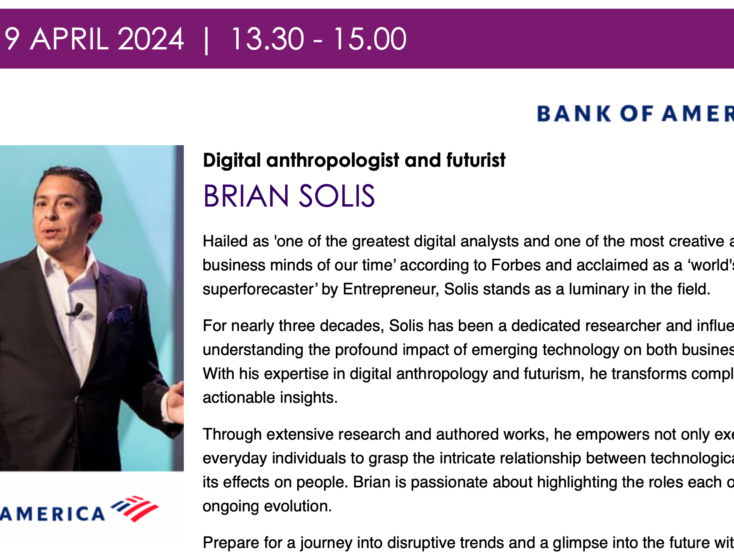
Brian Solis / PressBrian Solis to Keynote Global Equity Conference in Nashville on 9 April 2024
On 9 – 11 April 2024 more than 500+ global company directors, senior managers, stock plan, HR, reward and benefits professionals will fill the halls a...
- Brian Solis / Press
The End of Business as Usual: An Academic Book Review
This made my day… I just read a book review for “The End of Business as Usual,” my second solo book published in 2011. Not only is i...
Brian Solis / Leadership, Lifescale, Press, Social IssuesLessons Learned, Advice I Would Give Myself and Probably Ignore, and the Skills I'm Learning to Unlock the Next Phase of My Career
For those of you who followed my work over the years, thank you. 🙏 I’ve always been reluctant to pull the curtain back to tell my story....
Brian Solis / PressIMMR Names Brian Solis in Top 20 List of Must Follow Thought Leaders in Generative AI
IMMR’s Dr. Phil Hendrix announced a short list of “20 Generative AI Must Follow” thought leaders. Brian Solis was named to the list....


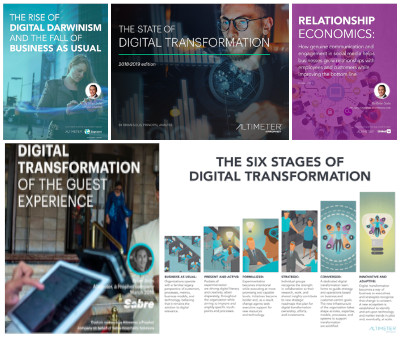
Research Gallery
Brian’s body of research has helped shape the evolution of current and unfolding market trends. As a pioneer of digital business, his research and work has served as a driver for innovation among some of the most lauded brands and startups. His recent areas of study include digital transformation, innovation, Generation-Connected, Culture 2.0, The Future of Work, and more. Brian leads original research directly or with partners who share common goals. This gallery was created to give you instant access to some of his more popular reports.
View AllRecent Books
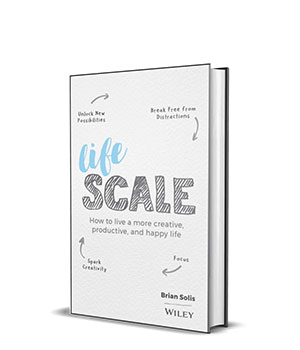
Lifescale
Escape from the dark side of distractions to live a better life. Are you struggling with focus, procrastination, anxiety, self-esteem, forgetfulness, or creativity? From simple first steps to reclaiming your attention, to becoming more satisfied, inspired, and creative, this book will lead you through your own journey of lifescaling: redefining success on your own terms.
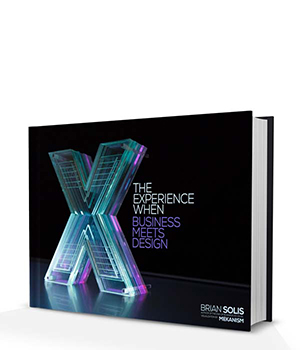
X: The Experience Where Business Meets Design
X explores why great products are no longer good enough to win with customers and why creative marketing and delightful customer service too are not enough to succeed. Brian shares why the future of business is experiential and how to create and cultivate meaningful experiences.
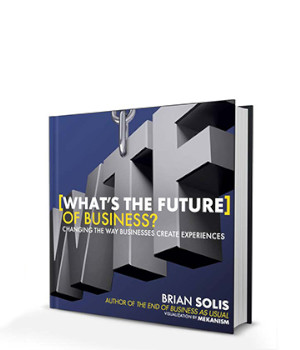
What’s the Future of Business?
What’s the Future of Business explores in a fun, visual and insightful way how connected consumerism breaks down into Four Moments of Truth, the role of technology in decision-making, and how businesses need to create experiences that mean something in each stage and also spark engagement between consumers based on those experience.
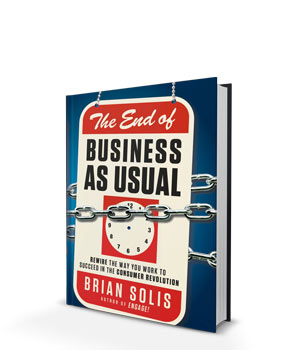
The End of Business as Usual
The End of Business As Usual examines each layer of the complex consumer revolution that is changing the future of business, media, and culture. As consumers further connect with one another, a vast and efficient information network takes shape and begins to steer experiences, decisions, and markets. It is nothing short of disruptive.