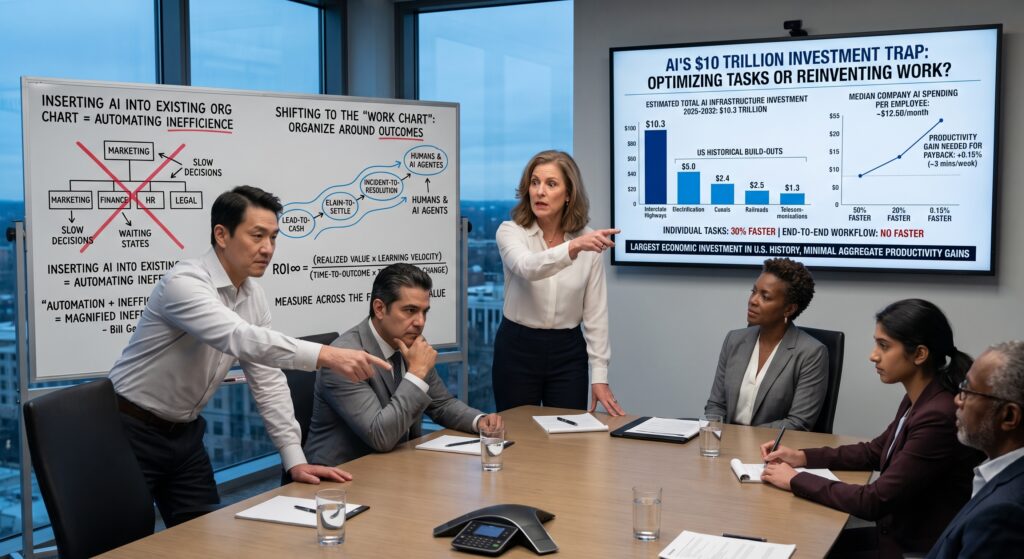
The conversation about AI has moved quickly from possibility to pressure or sense of urgency. Leaders are being asked to show results, justify investment, and prove that new tools are changing the business. But there is a more fundamental question underneath all of that…what happens when a new form of intelligence enters an organization whose workflows, decision rights, management systems, and operating structures were designed for a different era? The opportunity is so much more than making existing tasks faster….

Chief Executive: 5 AI Decisions Every CEO Must Own Before Agents Start Running The Business
Via Chief Executive We’re making the same decisions with AI. But for leaders who ask different questions, AI changes the assignment. Dave Wright and Brian Solis share lessons for CEOs from their new book, Infinite: How Visionary Leaders Transform Today’s Businesses into AI-Forward Companies. 5 AI decisions every CEO must own before agents start running the business For years, CEOs could delegate digital transformation. Digital transformation often lived somewhere between the CIO, the CDO, a transformation office and a series…
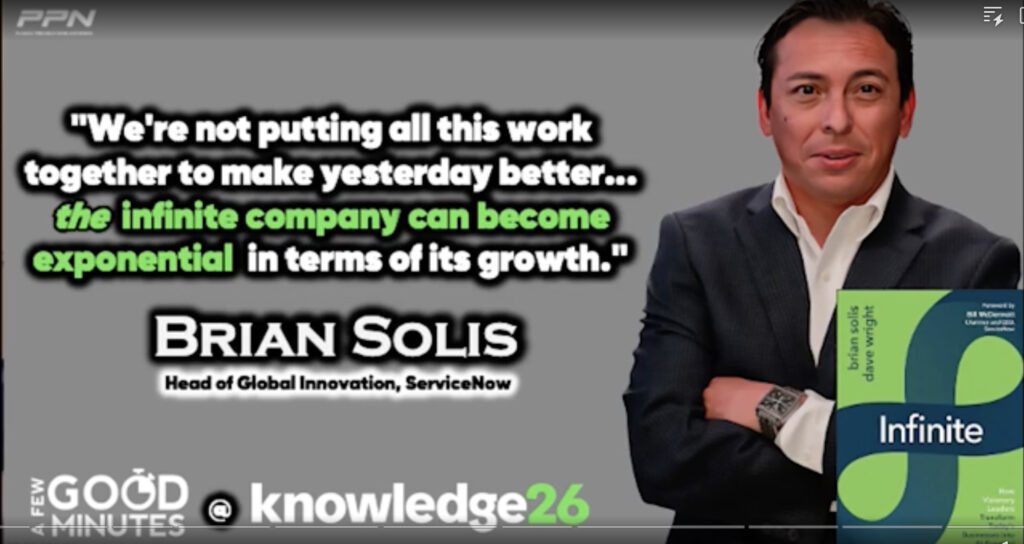
The Infinite Company: Building AI-Forward Organizations That Drive Exponential Growth with Brent Leary
Brent Leary and I have been friends for many, many years. So whenever we have the chance to sit down for a conversation, it never feels like an “interview.” It feels like two longtime friends exploring what’s next, asking bigger questions, and challenging each other to think beyond the obvious. In this conversation, Brent and I explored ideas from “Infinite,” the new book Dave Wright and I wrote to help leaders rethink what enterprise organizations can become in an AI-forward…
In an Era of AI Darwinism, ROI Now Represents Return on Intelligence
You can’t cut your way to growth. You can’t automate your way to innovation. AI is forcing every organization to reveal what it really believes about people. Do leaders see AI as a way to shrink the company into a more efficient version of yesterday? Or do they see it as a way to expand the organization’s capacity to learn, imagine, decide, create, and grow? That is the fork in the road. I call this moment AI Darwinism: the new…
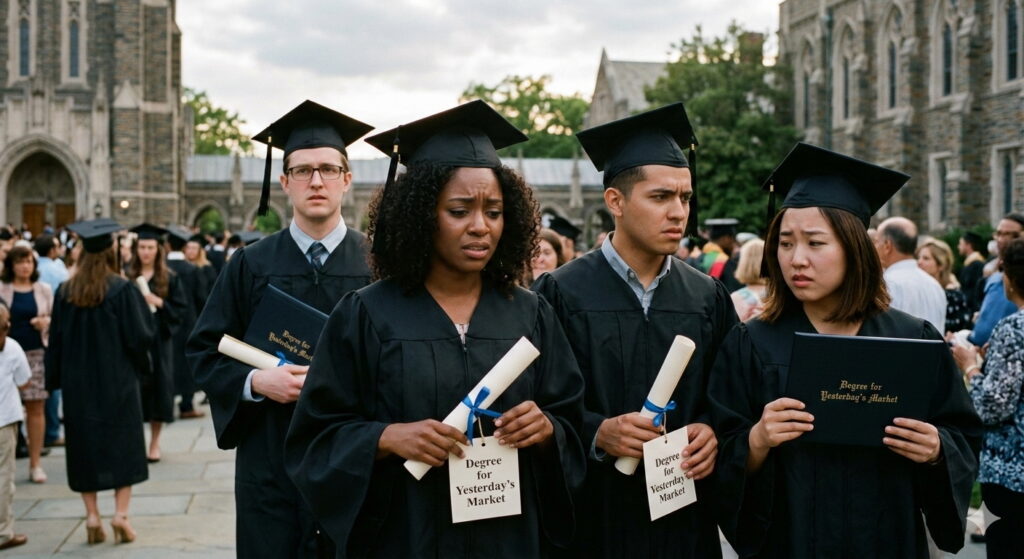
The Companies That Win With AI Won’t Just Cut Costs, They’ll Redesign Work
Based on interviews in May 2025 and subsequent, more detailed,, and repeated warnings in 2026, Anthropic CEO Dario Amodei has predicted that artificial intelligence could wipe out roughly 50% of all entry-level white-collar jobs within the next one to five years. Amodei is sounding the alarm to get our attention. If he’s right, leaders don’t get the luxury of debating whether disruption is coming, they’ll have to manage how it lands. Amodei’s advice is to track track where AI is…

The End of Business as Usual: An Academic Book Review
This made my day… I just read a book review for “The End of Business as Usual,” my second solo book published in 2011. Not only is it a review of a 13-year-old book. It’s a review in the “Journal of Academy of Business and Emerging Markets (ABEM),” Canada! The book still has staying power! 💪 Thank you to Dr Michael B. Pasco, Professor at the Graduate School of Business, San Beda University, Philippines, for the thoughtful review. 🙏 The…
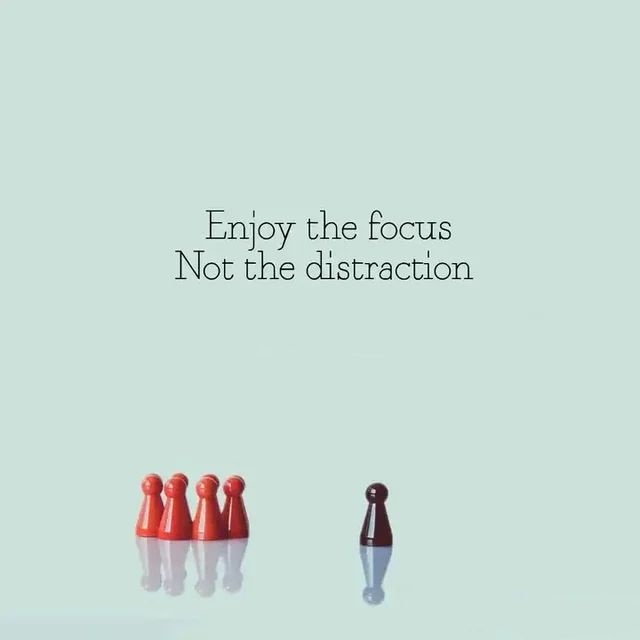
How to foster creativity and innovation by slowing down, reducing distractions, and single-tasking
My dear friend, Elisa Camahort and author of Roadmap for Revolutionaries, invited me to speak at the 2022 Rise conference organized by PBWC, the Professional BusinessWomen of California. When we explored all the trends converging that affect business professionals heading into the next year, we decided to focus on the core of what will influence everything we do next across the board…ourselves. In the days, months, and now years following our global CTRL-ALT-DEL moment, we have a choice in how…

The Escalating Dilemma of Executive Out-of-Touchness
A few years ago, my dear friend Stowe Boyd reached out to ask an important question in regards to future of work and business transformation. His goal was to cast the light directly on the (r)evolution lead by those who want change within the organization and also expose (and inspire) those who don’t. It’s a subject I’ve extensively studied over the years. In fact, I recently published “The Digital Change Agent’s Manifesto” to help those fighting for change learn the…
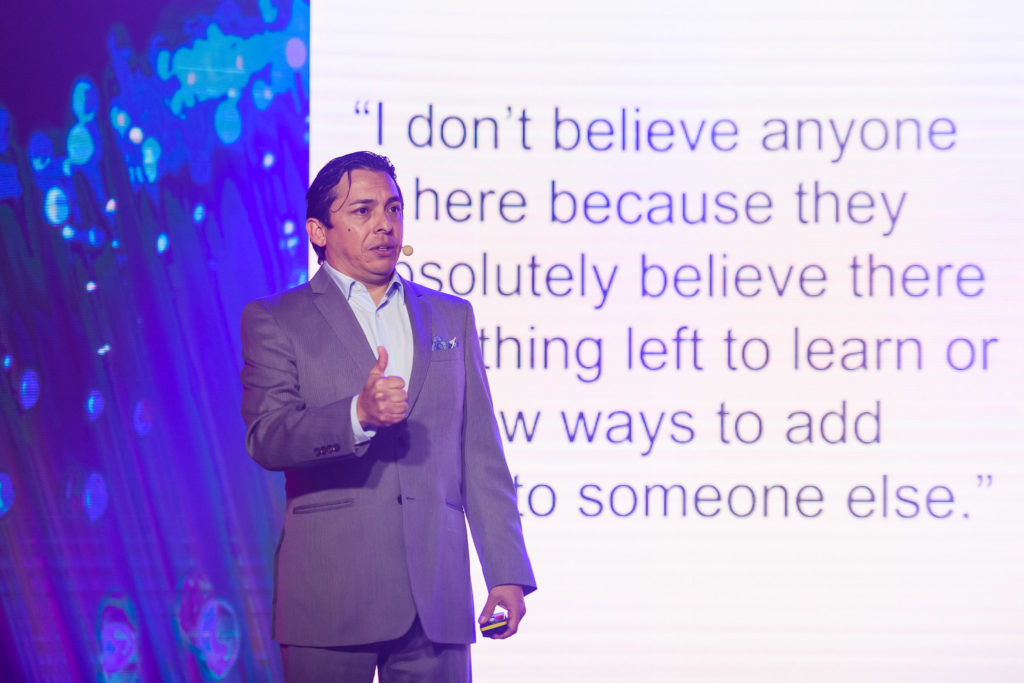
Top Futurist Keynote Speaker Brian Solis – The Future Happens to Us or Because of Us
We’re living in a very disruptive time. Digital disruption is all around us. It’s happening to us and because of us. So my message today is really about a choice. You have a choice as to what role you want to play in the future of the digital economy. Do you want to shape it? Or do you want to be affected by it? It’s a matter of “adapt or die.” All of the disruptive technology that’s happening in the…
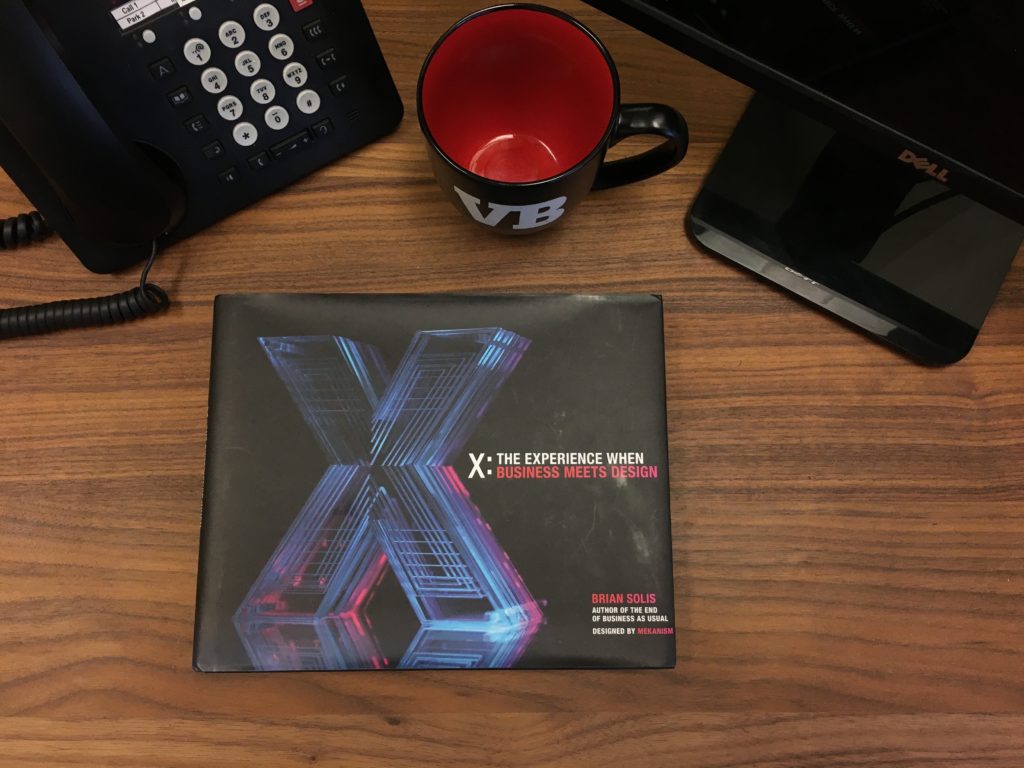
X: The Experience When Business Meets Design – GetAbstract Summary
Digital customer experience has never been more important. The pandemic accelerated e-commerce, AI and automation, and digital transformation by 10 years. What most businesses still aren’t prepared for however, is how to think beyond digital tools and platforms to design intuitive digital experiences that inspire human engagement in every touch point across the CX journey. That’s what X: The Experience When Business Meets Design set out to do. It was designed to help “imagineers” image a unified customer journey that…