I received an email from my friend at CIO Journal just as I boarded a United flight from Mexico City to San Francisco. He was on deadline and the topic was too good to miss. I’ve spent more than a fair amount of time studying and reporting on the social landscape as it pertained to internal engagement, communication and collaboration. I frantically typed on my iPhone with my thumbs before the door closed. Time was.running.out. With the hit of the…
The 9 Laws of Affinity in an Era of Digital Darwinism
We are indeed witnessing what can be best described as the end of business as usual. With the closure or dwindling performance of businesses once regarded as too big to fail or with the rise of every new Occupy-like movement around the world, we are reminded of the grand chasm that exists between consumer values and the values of today’s businesses. What is becoming painfully obvious is that people everywhere are calling for change and they’re taking to the streets…
Dr. Shaquille O’Neal Dunks on Investing, Geekery, and Social Media
Yes…that’s me floating above Shaq’s head. One of the highlights of SXSW Interactive this year was Dr. Shaquille O’Neal (did you know he had a doctorate degree?). He joined me on stage at the Long Center for Performing Arts to a theater packed with adoring fans. Before we took the stage, we spent some time to shoot a special episode of Revolution. Not only is Dr. Shaq an NBA champion, an Olympic gold medalist, a 15 time All Star, 6th…

Think Like a Startup: Growth Hacking Introduces New Marketing Hacks to Businesses
Do more with less! Sound familiar? This is a statement I hear in almost every strategy and planning meeting I attend on behalf of enterprise and startup clients alike. The idea of course is to accomplish great feats, beyond the output or achievements of years gone by, without the previous resources exploited over time. Several years ago, I adopted a way of thinking to help me realize that how things are done today isn’t indicative of how they could be….
Can you answer the question everyone is asking? WTF – What is the future of business?
Today’s leading companies are already becoming obsolete. Fortunately or unfortunately, they won’t know until it’s too late. In 10 years, 40% of the Fortune 500 was replaced. Irrelevance is only accelerating. It’s Digital Darwinism out here. #AdaptorDie! Ignorance is bliss, until it’s not. Technology…social, mobile, real-time, it’s changing the world. Customers are evolving into something new. They’re more connected, empowered, and demanding. Can you answer the question everyone is asking? WTF!? What’s the future of business is not a question…
Will you fall or thrive in this consumer revolution? Believe it or not, you decide
In a post Occupy world, organizations everywhere should contemplate the themes that flooded the undercurrent of one of the greatest consumer uprisings in recent history. Even though some minimize the rise of Occupy as a rebellion without a cause, I believe there’s much to learn from these events to prevent them from happening again…or at least to you. What’s the Future of Business? WTF While the inspiration for the insurrection is diverse and personal, one thing is clear, everyday people…
Exploring the Fifth and Sixth P of Marketing
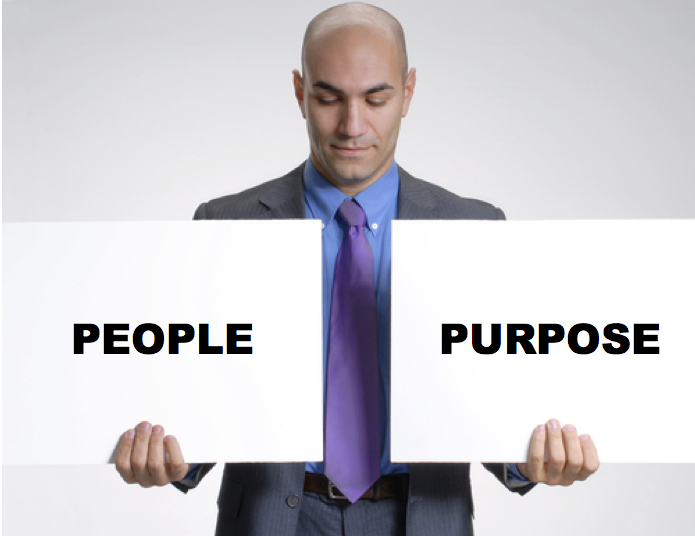
For years I’ve written about how the 4 Ps of Marketing, Product, Place, Pricing, and Promotion represented a dated perspective of customers and markets. In an era of connected consumerism, one could argue the merits of any of “Ps” and whether or not they’re still relevant. I suppose that’s a debate for another time. Instead, I’d like to introduce of two additional Ps that will propel a decades old concept and modernize it for a social economy. Truth be told,…

Social media is not your saving grace: Experiences should first be defined and supported
Social media experts will tell you, and they’ll make a pretty good case too, that it is the golden key to unlocking meaningful customer relationships and the gateway to surprising and delighting them over time. So how does social media do this? Well all it takes is to listen, be part of the conversation, curate great content, run native advertisements, and oh yeah, be transparent and authentic. Done and done. Well, wrong and wrong. Social media isn’t going to save…
Blame it on the youth: How Rocket21 is connecting Generation Z and the future of business
The Millennial or Generation Y has the world abuzz. This generation is not only changing how businesses sell and what they sell, they’re also changing how businesses work. Millennials are indeed the first truly digital generation but they’re aren’t the only group with digital DNA. Generation Y, those that follow X and Generation Z behind them are rising fast. They too see the world differently and already represent a significant economic force in the world. In the United States, Generation…
Why Do Customers Use Social Networks for Customer Service? Because They Can…
Every day, an increasing number of connected consumers are taking to social networks to ask for help or express sentiment related to business or product related experiences; some do so to seek resolution from their peers, others broadcast questions or comments as a form of catharsis; and a smaller group of consumers actually hope to receive a response directly from the company. The reality is that social media is the new normal. A myriad of social networks, whether you use…