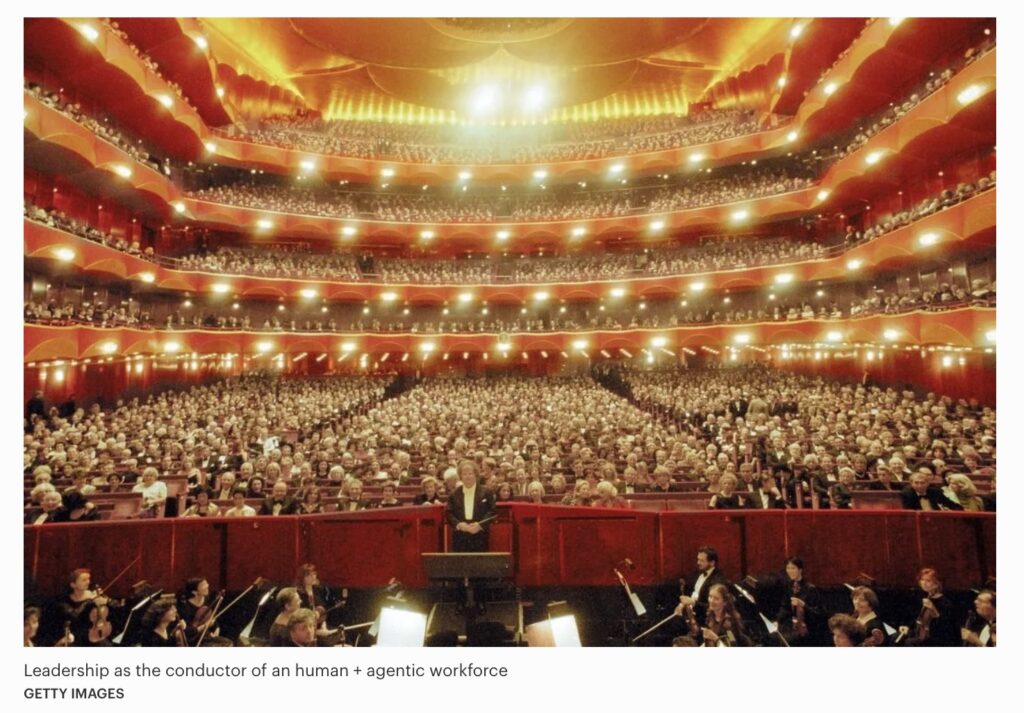
My latest for Forbes explores why AI in customer service must evolve beyond mere cost-cutting to deliver intelligent, personal, and experiential journeys. The traditional CRM, once a siloed record system, is transforming into an orchestrated action hub, leveraging AI agents. However, a critical “platform problem” arises from disparate vendor agents, causing sprawl and inconsistent controls. The solution is a unified control plane, acting as a central nervous system to govern and coordinate all AI assets, ensuring accountability. This shift demands…

Workflow: The AI-driven CRM revolution
Originally published in Workflow By ServiceNow executives, Dave Wright, Chief Innovation Officer; Brian Solis, Global Head of Innovation; and Simon Grice, Senior Director, Innovation How reimagining customer relationship management for an AI-first world can help deliver more relevant, personalized, and productive experiences CRM has all the ingredients of an epic enterprise tech success story: massive growth, industrywide adoption, and innumerable technological innovations that have suggested new strategic possibilities for the enterprise over the span of decades. There’s only one problem:…
Article Awarding Pegasystems Mentions Brian Solis and His PegaWorld Keynote on AI
In an extensive article on ZDNet extolling the virtues of software giant Pegasystems and why they were a CRM Watchlist 2019 winner, Paul Greenberg – President of the customer strategy consulting firm The 56 Group, LLC – mentions Solis (an “uber-thought leader”) in reference to his keynote on artificial intelligence (AI) in the enterprise at the recent PegaWorld 2019. In the CX section of a part of the article devoted to Pegasystems’ corporate narrative, Greenberg writes: “To the credit of…

Destination CRM: To Engage Customers, Your UI Design Needs These 6 Qualities
Industry publication Destination CRM recently did an article with advice on user interface designs for customer-focused websites, quoting extensively from Brian Solis’ public thoughts on the subject.

Stop Talking About a Customer-Centered Culture and Build It Already
In 2016, I had the opportunity to visit my mother’s birthplace, Madrid, Spain, and keynote the inaugural Digital Business World Congress (DES). I was invited to present on the business implications of experience design and also the state and future of artificial intelligence (AI) and customer experience (CX). Leading up to the event, I was invited to participate in a media tour to promote my arrival in Spain. The topics ranged from digital transformation to CX to disruptive technologies to corporate innovation….
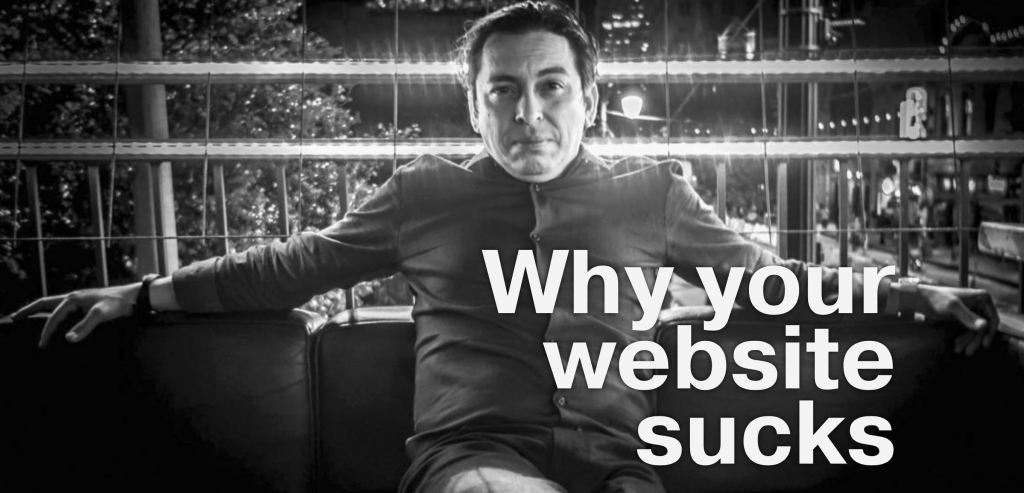
Why your website (and CX) suck and how to better engage digitally-savvy consumers
I recently had an opportunity to speak with Juliet Stott of Content Magazine about the impact digital has had on marketing, how customer experiences can help marketers differentiate their brands, and why websites in general, suck. It was such a fun and revealing conversation, that I wanted to share it with you here. I hope it helps you! Content: What has been the greatest disruption to marketing, and what impact has it had on the industry? Brian: Social is one of the disruptions,…
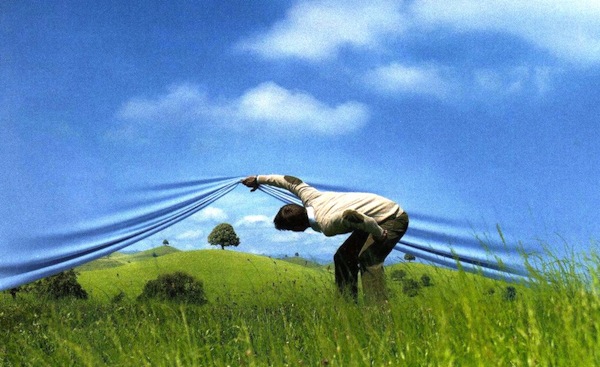
Executives Don’t Live the Brand the Way Customers Do and This is Why CX is Shorted
The one thing about CRM is that it often has very little to do with “customers” or “relationships” and more to do with the “management” of dated perspectives, systems and processes. So many executives these days are chasing technology and recruiting new expertise to track customers, analyze their data, map journeys and push the most relevant content, messages, promo on the right device at the right time. You’re probably asking, “what’s wrong with that?” In many ways, it is exactly the…
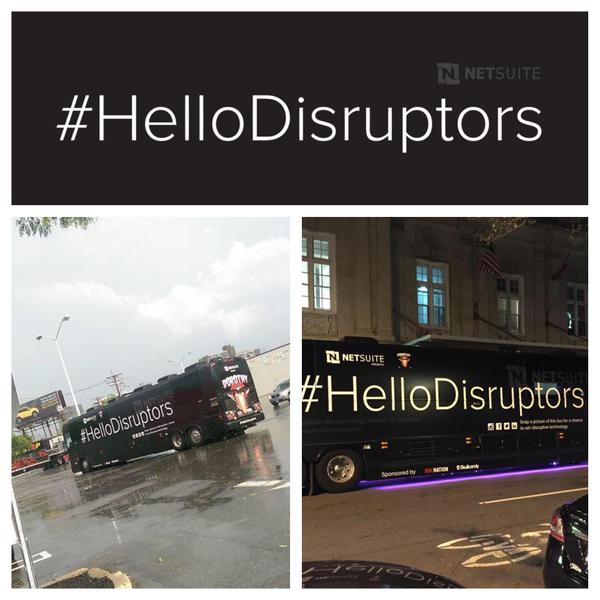
Marketing to Marketing to Reimagine Marketing
Guest post by Fred Studer (@fredstuder), Chief Marketing Officer at NetSuite Sometimes, in fact oftentimes, the most important audience for your message are the people who are already working for you. In an age of online surveys and instant feedback across social channels, articulating your message to the people who work in your company can often be neglected. In fact, if you haven’t convinced and energized your own people, you’re going to be hard pressed to convince the market. My…
Stop Talking About Technology and Start Designing Experiences
As Joe Pine and Jim Gilmore wrote in the Experience Economy: Work Is Theater & Every Business a Stage, the future of business is less about products and more about creating experiences. That’s right. You’re no longer in the product business. Products are a by-product of experiences you set out to create. Products are also social objects that spark desirable relationships between you and customers and also among customers. The future of business is experiences. One year after launching What’s…

L.L. Bean: The importance of relationships in CRM and social in CSR
This is a story about the bond between a brand and a customer and the importance of relationships to do good things together… Guest post by Steven Gadecki, Director of Digital Marketing at SONY Pictures Television – Follow him on Twitter My story begins when my mother bought me an L.L.Bean backpack when I first started attending Broome Community College (BCC) in Binghamton, NY. Little did I know at the time that this backpack would become the catalyst for the…