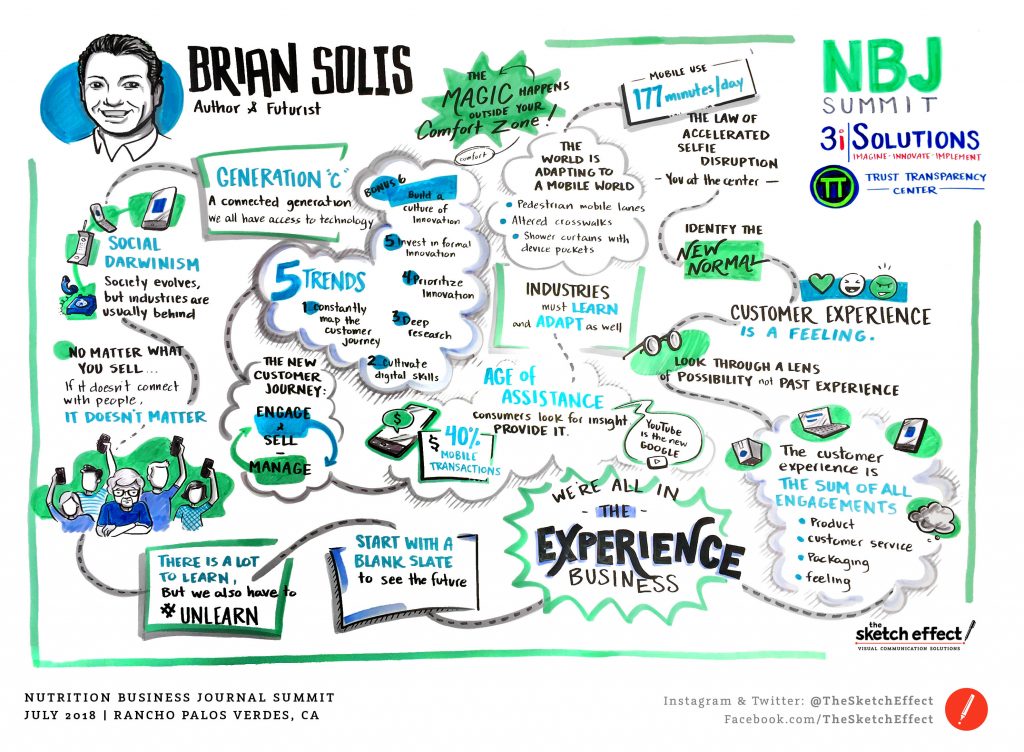
In July 2018, I had a chance to speak in Rancho Palo Verdes at the NBJ Summit. I think I would move to the area given the opportunity. It’s a wonderful oasis in between the [INSERT ADJECTIVE/S HERE] of Southern California and the serenity of a beachside community. Before walking off stage, I noticed a graphic recording by The Sketch Effect off to my left. I missed it during my presentation, but was more than curious about what was captured…

Retail Customer Experience: How poor customer service impacts the retail customer experience
Industry website Retail Customer Experience recently wrote an article about how poor customer service impacts the retail customer experience, and extensively quoted Brian Solis’s report with Altimeter on the subject.
Designing the Future of Customer Experience
My last book, X: The Experience When Business Meets Design, explored the art and science of experience design. Looking beyond the disparate, but important disciplines of customer experience, brand experience, user experience, service experience, I sought to spark a creative coalescence between them…hence, “X.” It’s the letter, and more importantly, the experience, they share. Why leave experiences to chance? Why should experiences be disconnected and impersonal? Yet, for the most part, even in an era of digital transformation and machine…

iperceptions: In-store shoppers are not satisfied with their mobile experience and more CX stories you should read
The blog of marketing company iperceptions recently did a round-up of interesting customer experience articles around the web, and included Brian Solis’ essay on how brands must look beyond merely having a mobile presence.
Digital Signage Today: McDonald’s and interactivity claim top September 2018 headlines
Industry publication Digital Signage Today recently did a roundup of their most popular September 2018 stories, quoting extensively from Brian Solis’ thoughts on customer engagement.
Digital Signage Today: 2 keys to digital signage engagement
Industry publication Digital Signage Today recently did an interview with Brian Solis about how companies can better engage their customers through signage.

LiftIgniter: Experience is Everything: Why Real-time Personalization Matters in a Post-GDPR World
Software company LiftIgniter recently hosted a webinar with Brian Solis on the subject of real-time personalization with customers; this article at their blog summarizes the highlights.

Shep Hyken: 5 Top Customer Service Articles for the Week of August 20, 2018
In his most recent weekly roundup of great customer service articles, industry expert Shep Hyken included Brian Solis’ recent look at Domino’s Pizza and their customer experience innovations.
Voziq: 50 Handpicked Resources for Customer Retention Leaders – July 2018 Edition
Industry publication Voziq just published the July edition of their handpicked resource list for customer retention leaders, and included Brian Solis’ recent primer article on customer experience issues.
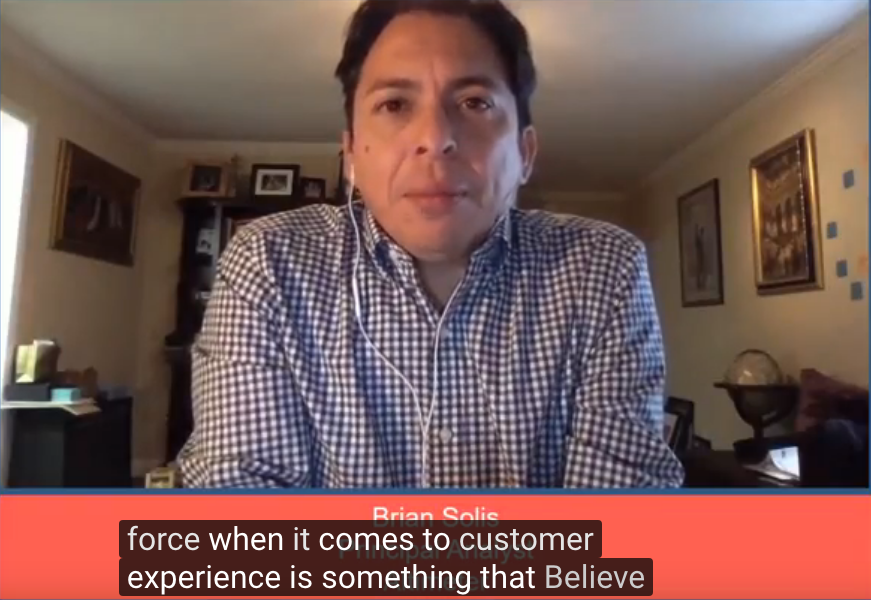
Customer Experience Professionals Association: CS Disruptors 2018
The Customer Experience Professionals Association recently released a video asking a series of “CX disruptors” for their insights on the latest developments, with Brian Solis quoted several times.