
Part 2 in a media tour series for my 2016 keynote at Digital Business World Congress (DES) in Madrid, Spain. This interview is with Expansión, “La tecnología está creando una sociedad narcisista.” Technology is creating a narcissistic society We all talk a lot about change, but how can we change ourselves? This question refers to a famous quote by Russian novelist Leo Tolstoy, “We all talk of change but we don’t talk of changing ourselves.” To change ourselves requires us to first…
Marketing in the Selfish Economy
The future of marketing is incredibly selfish. It has to be. We’re becoming a generation of accidental narcissists who want things our way, when and how we want it. But it’s not as bad as it sounds. It’s just an inevitable effect of technology’s impact on our lives. It’s how marketing responds that counts. The key though is accept that to reach and engage a generation of narcissistic customers, the future of marketing has little to do with marketing at…

The Accidental Narcissist and The Future of Customer Engagement
Have you ever noticed that your Facebook News Feed is the digital equivalent to “It’s a Wonderful Life?” Perhaps you’ve liked your Instagram stream to that of “Lifestyles of the Digital Rich and Internet Famous.” In each network, and across multiple social streams, you’re fed a visual buffet of travel, food, fashion, celebrations, which in assemblage, tell the story of life well lived or at least a life well curated. And at the center of each of these experiences is…
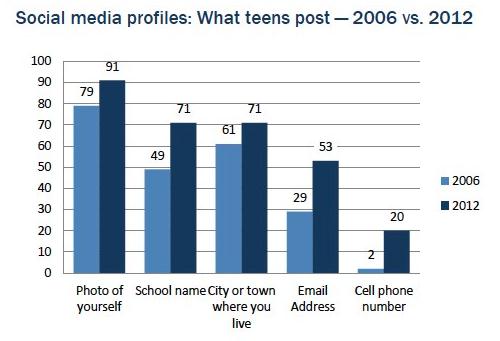
Broadcast Yourselfie: How teens use social media and why it matters to you
If you want to know the future of technology and its impact on society study how younger generations interact with one another today. With the sting of a face palm, you’ll experience a sheer rush of humility as you realize that everything you thought you knew about tech is simply nascent compared to the sophistication of digital natives. No matter how connected you are or how many followers or friends you have online, there’s a sense of artistry mashed together…
![The Accidental Narcissist And The Future Of [Connected] Customer Engagement](https://briansolis.com/wp-content/uploads/2013/08/selfie_-_Google_Search-1024x650.png)
The Accidental Narcissist And The Future Of [Connected] Customer Engagement
Have you ever noticed that your Facebook News Feed is the digital equivalent to “It’s a Wonderful Life?” Perhaps you’ve likened your Instagram stream to that of “Lifestyles of the Digital Rich and Internet Famous.” In each network, and across multiple social streams, you’re fed a visual buffet of seflies, travel, food, fashion, and celebrations. In assemblage, they tell the story of life well lived, or at least a life well curated. At the center of each of these experiences…
It’s a Small World After All: The Top Global Web Trends
Social media is a global phenomenon indeed. Certainly Facebook, Twitter, Google+, in their own way, each make the world a much smaller place. The distance between any two people is shrinking as the number of network connections continues to proliferate. I’m sure you’ve heard at one point or another, that the distance between two people in an offline world is six degrees. In a recent Facebook study for example, the average degree of separation between two people in the network…
The Human Cost of Social Connectivity
The Egyptian Revolution is a historical event for many reasons, not the least of which is the relentless dedication of human will to overcome tyranny against all odds. For those who study social networks, the revolution is also of course significant because of the role Facebook and Twitter played in the concentration of discontent and the orchestration of upheaval. For the purpose of this discussion, I would like to focus on how Facebook, Twitter, YouTube and other social networks continue…
The Twitter Paradox
There’s an old saying, “If it ain’t broke, don’t fix it.” Twitter is a paradox that redefines that old saying to, “If it’s broke, don’t fix it, because it works.” For all intents and purposes, Twitter shouldn’t work, yet 200 million people (and bots) have created accounts in this thriving information egosystem. Now, news no longer breaks, it Tweets. Celebrities use it daily to connect directly with fans and also augment their income streams. Politicians and governments use Twitter to…
Adly CEO Arnie Gullov-Singh on the Social Era of Celebrity Endorsements
Celebrity endorsements are nothing new. In the era of social media however, celebrities now possess the ability to reach people in online networks. The difference now is that static or passive audiences have become interactive and more importantly, people have become stakeholders in the media where connect and socialize. Celebrities are presented with opportunities to engage people on a peer-to-peer level. Doing so changes the dynamics of the relationship from a hierarchical celebrity-to-fan association to a flattened person-to-person connection. It…
How do you increase social influence? Don’t think about the score
Influence: The capacity to have an effect on the character, development, or behavior of someone or something, or the effect itself. Digital influence is a controversial topic. At the heart of the matter is this idea of influence and it raises questions and doubts as to whether or not the ability to cause effect or change behavior is truly measurable. Regardless of the answer, we are introduced to a new reality of social networking, an era where our actions and…