
AInsights: Executive-level insights on the latest in generative AI…subscribe here. Google is exploring options to charge for “premium” features powered by generative artificial intelligence (genAI), which could rock its core search business and the search industry at large. The idea is to introduce value-added AI services into its premium subscription, which also offers Gemini AI assistant in Gmail and Google Docs. Google’s traditional search engine would remain free to users, supported by advertising. But charging for enhanced search features could…

AInsights: Google Released a Prompting Guide 101 to Advance GenAI Prompting Skills and Outcomes
AInsights: Executive-level insights on the latest in generative AI…subscribe here. Google released a “prompt guide” for Gemini in Google Workspace. Think of it as text-based ‘co-pilot’ to help users in Google Workspace get the most out of the Gemini large language model assistant. OpenAI did something similar with ChatGPT in January 2024 (infographic here.) The guide provides valuable tips and best practices for crafting effective prompts to get the most out of Gemini, such as using clear and concise language,…
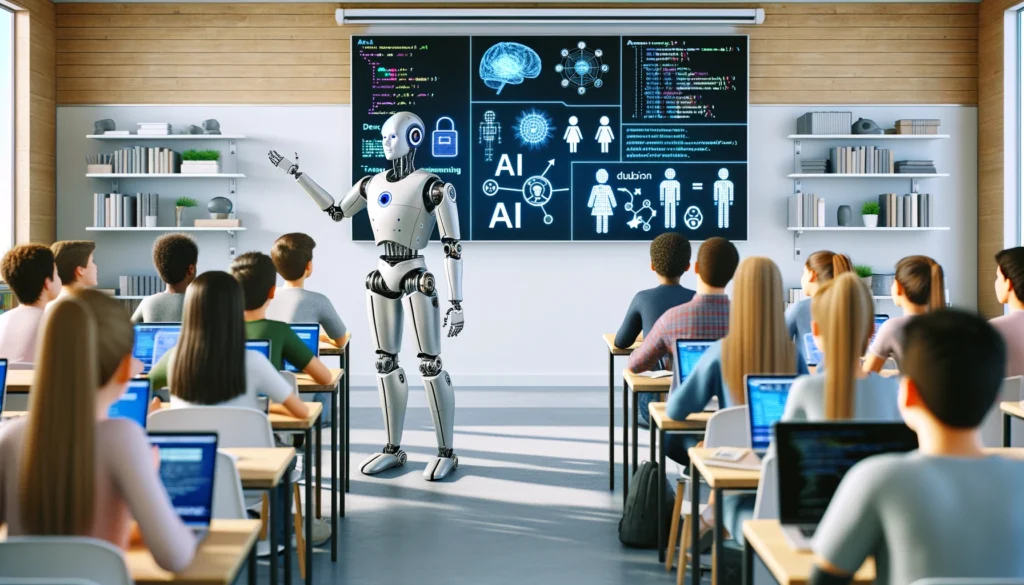
AInsights: NVIDIA’s Jensen Huang Ponders the Future of Coding, ChatGPT Gets Memory, Google Gemini 1.5 and the Meaning of Tokens, Three Alternatives to Google Search
AInsights: Executive-level insights on the latest in generative AI…. NVIDIA’s Jensen Huang says teaching children how to code is no longer the goal, AI is meant to make programming, human At the World Government Summit NVIDIA’s Jensen Huang told the audience that children no longer need to learn how to code. Cue the brake screeching sound. “I want to say something and it’s going to sound completely opposite of what people feel,” Jensen said on stage. “Over the course of…

AInsights: MultiOn and Large Action Models (LAMs), Introducing Google Gemini and Its Version of Copilot, AI-Powered Frames, Disney’s HoloTile for VR
AInsights: Executive-level insights on the latest in generative AI…. MultiOn AI represents a shift from generative AI that passively responds to queries to actively participating in accomplishing tasks The idea is this, tools such as ChatGPT are trained on large language models (LLMs). A new class of integrated, end-to-end AI solution is emerging to autonomously connect information, processes, digital experiences and outcomes as large action models (LAMs). MultiOn AI is a new class of tool that makes generative AI actionable. It…

Google’s Meena Chatbot Could Humanize Conversational AI, But Are Enterprises Ready to Invest in More Intuitive Digital Customer Experiences
TechTarget’s Don Fluckinger is a friend and a highly regarded tech journalist. He recently rounded up dome of the industry’s leading CX and AI experts to explore Google Meena’s next-generation conversational AI. He always brings together a great group for a productive and thoughtful conversation! For context, chatbots today are largely used in rule-based engagements, sitting on top of structured data to perform a set of focused operations. They connect customers to common information or facilitate everyday transactions. In the more effective…

TechTarget Asks Brian Solis About Google’s Meena AI Chatbot and Its Role in CX Innovation
TechTarget’s Don Fluckinger rounded up industry experts to explore Google Meena’s next-generation conversational AI. He always brings together a great group for a productive and thoughtful conversation. Leading digital analyst Brian Solis believes that Meena represents a potentially significant leap forward in conversational AI. Today, chatbots are largely used in rule-based engagements, sitting on top of structured data to perform a set of limited operations. They connect customers to common information or facilitate everyday transactions. In the more effective cases, AI is…

The 11 Digital Trends Shaping CX and Marketing in 2020
Each year, I help kick-off Brand Innovators Mega-Trends event during CES. In the opening keynote, I share the trends (and hopes) I would love brand executives to embrace in the new year. In 2020, the presentation focused on “11 Digital Trends Shaping CX and Marketing.” There are certainly more than 11 trends to follow, but in the context of this conversation, I focused on the convergence of AI, customer empathy, digital distractions and intentions, and the technology that connects the…

EA Puts Customers and Data at the Center of its Innovative Marketing Organizational Model
EA CMO Chris Bruzzo sees the direct relationships between customer experience, data, user experience and marketing as a new operational mode. That’s what I call X. Marketers who prioritize customer data in their work will find new opportunities to deeply engage their customers on a personalized level. And that’s what customers are now expecting from their favorite brands. But, marketers who simply use new technology to be on trend will find themselves limited to the same old thinking and results….
Brian Solis Quoted on Privacy at End of CNET article on Google’s Purchase of Fitbit
Solis’ view on personal privacy in the digital age wrap a CNET feature by Richard Nieva about Google’s purchase of Fitbit. The article is titled, “Google pushes further into health care with Fitbit, raising new privacy concerns.” The article begins: “Google’s $2.1 billion purchase of Fitbit signals that the search giant is intent on burrowing deeper into our lives, giving it access to some of our most personal health information. If the company’s earlier efforts in health care are any…

Marriott International Prioritizes Innovation in Guest Experience to Cultivate Brand Loyalty and Drive Growth
There’s an old adage in business: A happy customer is a loyal customer. Focus on driving loyalty, and you cultivate a customer relationship that is not only special, but also incredibly rewarding for the business over a longer period of time. By putting loyalty at the center of everything, loyal customers become proud stewards of the brand, advocating their experiences and going out of their way to spend more time and money with the brand. In any given category, their…