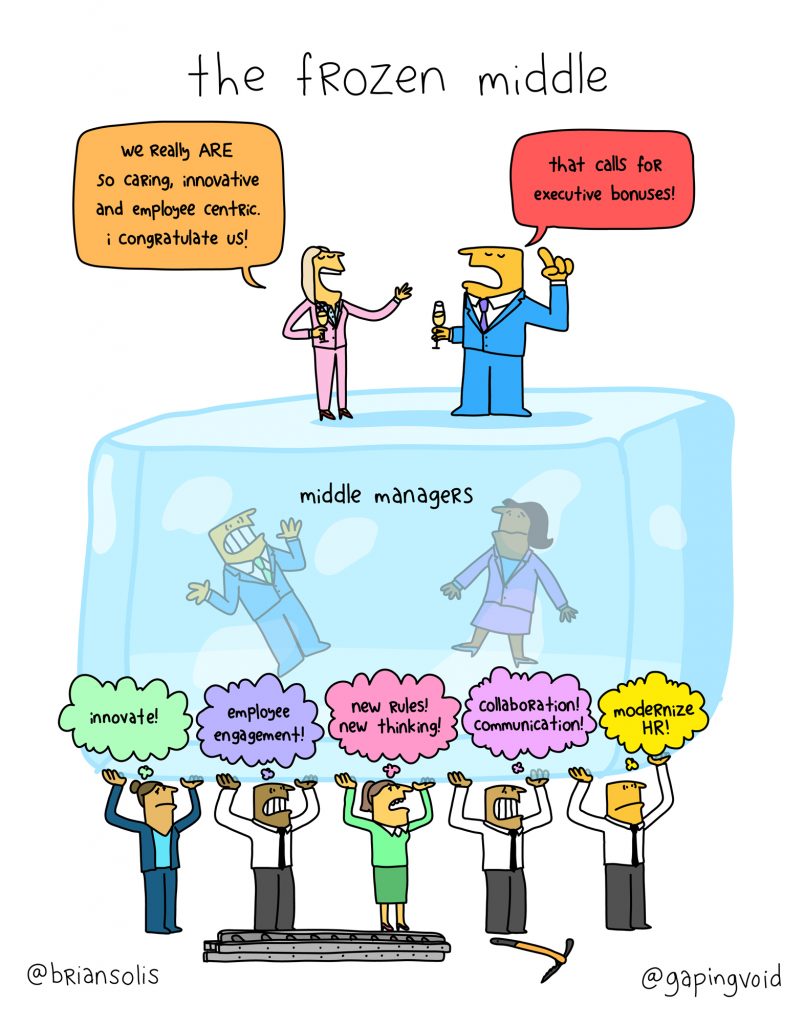
Illustration created with culture design firm @GapingVoid We live in a time of digital Darwinism. As technology evolves so do markets. And as they evolve, behaviors, values and norms also adapt. This sets the stage for the widespread disruption that we are witnessing today. Regrettably, or not, many reigning executives are not experienced to lead growth and innovation strategies as disruptive technologies radically shift everything around them. Yet, no matter how well we study history, it’s always doomed to repeat itself….
What is Influence 2.0 and why is it important in the future of CX?
Before social media, before modern digital marketing and before DCX and digital transformation, I spent much of the late 90s and early 2000s studying and experimenting with online influence. In February of 1999, I opened a lab to test and learn and in the process, was one of the many contributors to shape the future of digital marketing and customer engagement. Shortly after joining Altimeter Group in 2012, I shared all of the research I had collected and more and published…
Part 2: The Broken Link of Social Customer Service
Part Two. An edited excerpt of What’s the Future of Business, Changing the Way Businesses Create Experiences In Part 1 of this series, The First Mile: The Broken Link of Social Media Customer Service, we reviewed the opportunities and challenges that face any business seeking to engage customers in social networks. To become customer-centric requires a culture that supports customer-centricity and an active investment in defining the first mile experience. The first mile of customer engagement is a post-commerce or…
The GRAMMY Awards 2012: How social media changed the DNA of the Recording Academy
In celebration of the 54th GRAMMY Awards, we are debuting a special edition of (R)evolution. Shot on location in Los Angeles, Evan Green, CMO of the Recording Academy discusses the fusion of two worlds, the social explosion and the increasingly sophisticated expectations of consumers. In this fascinating discussion, we learn how a 54 year old industry body adapted to the change in how people interact with television, music and one another, shifting from watching the conversation to engaging and helping…
@ is the Universal Sign of Engagement
For decades, companies were very good at pushing messages into markets and talking at people rather than with them. Now companies are embracing the idea of two-way interaction. Monitoring conversations is becoming standard procedure as small and enterprise businesses alike make substantial investments in tools such as Radian6, Sprial16 and Brandtology. And, not only are companies monitoring conversations, they’re adopting social media management systems (SMMS) such as Seesmic and CoTweet to operationalize conversations and platforms such as Objective Marketer, PeopleBrowsr…
Engage with Purpose
I was recently interviewed by my friends at WebCopyPlus. I thought I’d share it with you here… At a time when everyone with a smart phone and a Twitter account boasts social media genius, digital analyst Brian Solis renews our faith in the existence of intelligent discourse in that realm. Author of Engage!, a comprehensive guide for businesses vying for success in the social web, Solis offers practical advice on how to build a social media strategy and measure its…
Twitter Tools for Marketing and Community Professionals
Twitter is nothing short of a phenomenon. At the very least, it connects people to each other through a rich and active exchange of ideas, thoughts, observations, and vision in one, highly conducive ecosystem (known as the Twitterverse). The social fibers that weave together this unique micromedia network is strengthened by the expertise, respect, trust, admiration, and commonalities. These fabrics bind the people who breathe life and personality into the global community as well as fueling the disparate micro communities…
Ariel Waldman vs. Twitter, When TOS Doesn’t Apply to You
Credit: Ariel Waldman This is part of my ongoing series on Crisis Communications 2.0, which helps companies and marketing professionals learn from each other to more effectively communicate with customers, stakeholders, media, and peers. I purposely waited to write this post until this discussion cleared techmeme so that I could reach a fresh set of people who could see things clearly, while also calling attention to something we overlook everyday. When’s the last time you actually read the terms of…
The Value of Online Conversations
No, blogs are not dying. No, blogs are not going away. Blogs will continue to serve as one of the driving forces for the democratization of how content is created, shared, and also internalized. All forms of user-generated content will continue to excel…maybe to a fault. In conjunction with how blogs are continuing to influence the evolution of online conversations, micromedia is also inspiring new forms content creation and in turn, contributing to the spike of mostly irrelevant conversations. Steve…