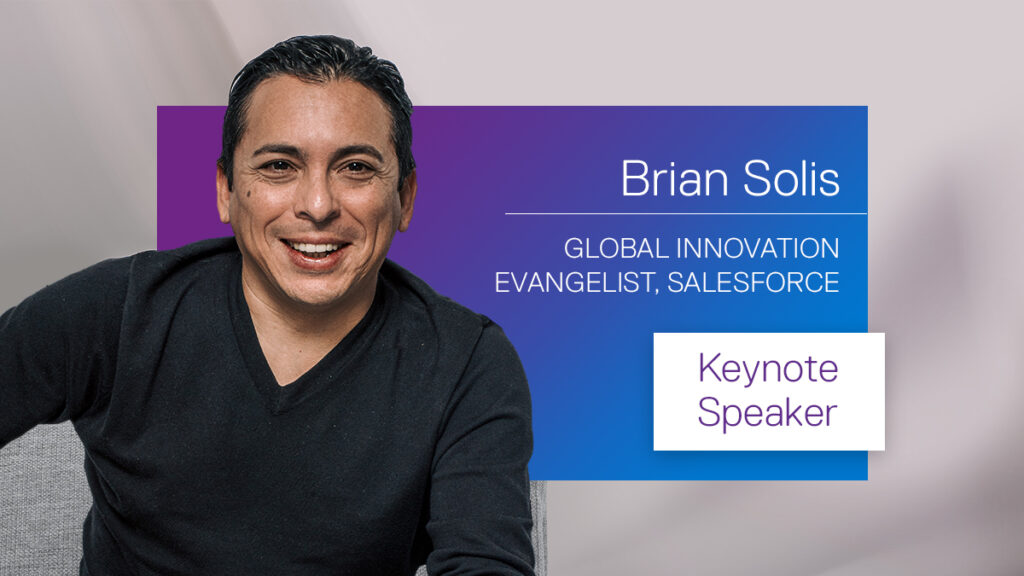
Brian Solis joined an incredible lineup of entrepreneurs including Bobbi Brown, Rakia Reynolds, Kendra Scott, and Michael Dell for its remarkable Dell Women’s Entrepreneur Network (#DWEN) virtual summit, The Path Forward. Brian created a special presentation for women entrepreneurs attending the event in light of COVID-19 disruption. Entitled, “Today’s Disruptors are Tomorrow’s New Economy,” his presentation focused on iteration, innovation, the art of the pivot, and also the humanity behind resilience. “The challenge, and the gift, before us is the blank…
Investing in Social Networks to Earn Influence and Reciprocity
On this special episode of Revolution, we meet Porter Gale, former VP of Marketing of Virgin America, advisor to exciting startups and business ventures, avid speaker, and also the author of the best-selling book, Your Network is Your Net Worth. Porter is someone whom I personally admire and have also had the good fortune to work with over the years. With Porter, no matter what she’s working on, everything begins and ends with people. She shares her recipe for success…
How a Conversation About a New Movie Made Me Rethink How I Chase My Aspirations
On this episode of Revolution, I invited, or rather subjected myself to the antics of my good friend Hooman while on camera. In San Francisco, he’s best known as one of the main personalities on the drive-time morning show at Alice 97.3. In Silicon Valley, he’s an active participant in learning and shaping how technology affects consumer entertainment. Now he’s in the movie business…or at least trying to break in. But how and why does he think he can make…
To be successful in business, you need to see what others don’t
I can’t believe that The End of Business as Usual is now officially available. To celebrate, I’d like to share the words of those who helped support its launch. First up is Mark Cuban, someone whom I greatly respect and someone who has shown that vision, passion, hard work and taking risks are the keys to unlock success – however you define it. “To be successful in business, you need to see what others don’t. Start with this book. Someone’s…
Revolution: Jim Louderback, Revision3 CEO on the Future of Broadcast and Web Television – Part 1 of 2
Long time friend Jim Louderback joins us for the latest episode of Revolution. Jim is the CEO of Revision3, a leading Internet television network. Founded by Digg’s Kevin Rose, Jay Adelson, and David Prager, Revision3 creates and produces original episodic, community-driven programs watched by what could only be described as a very passionate fan base. The network gets over 65 millions views and over 19 million unique viewers per month. Indeed, the Web, and specifically, the social web, is becoming…
Twitter Promoted to Ad Network
Four-and-a-half years ago, Jack Dorsey sent the Tweet that would eventually spark a social revolution. At just 24 characters long, Dorsey and the Twitter team introduced us, one by one, to a new medium for connecting and communicating with one another. It would forever change how its community shared, discovered, and learned, setting the stage for a new era of influence and relevance. And in just four short years, Twitter would emerge as something more personal than a social network,…
The Golden Triangle
Source: Shutterstock Prior to keynoting the PACA conference in Miami, Maria Kessler, president of the PACA Association, asked me if I had read a recent post by Fred Wilson entitled “The Golden Triangle.” We were deep in conversation as I was seeking an alternate title for my next book that identifies the divide between brands, information, and consumers and how we can, as social architects and engineers, build the bridges between people, contextual relationships, and technology. While “The Golden Triangle”…
The Dichotomy Between Social Networks and Education
Einstein Chalkboard: Source Recently, I discussed the validity of whether or not social networking (the verb) and social networks (as a noun) were impairing our ability to learn. A Stanford study suggested that this might be the case. It seems that the initial research and its supporting data is now emerging to help us further analyze whether or not this is indeed true or merely hypotheses based on the various samplings of individuals who may or may not serve as…
Humanizing Social Networks: Revealing the People Powering Social Media
Compete: Top 25 Social Networks Social Networks are among the most powerful examples of socialized media. They create a dynamic ecosystem that incubates and nurtures relationships between people and the content they create and share. As these communities permeate and reshape our lifestyle and how we communicate with one another, we’re involuntarily forcing advertisers and marketers to rapidly evolve how they vie for our attention. Facebook, MySpace, Twitter, Yelp, and other online communities transformed the regimen and practice of marketing…
Social Networks Now More Popular than Email; Facebook Surpasses MySpace
You heard that right…no matter how much time we sink into our inbox trying to keep up with all that barrage of never-ending mail, a new report sent over by Nielsen (thanks Sandra Parrelli) claims that Social networks and blogs are now the fourth most popular online activity today. The report, “Global Faces and Networked Places,” features data captured from December 2007 through December 2008 and reveals some very interesting statistics worth noting. Here’s are the highlights: Two-thirds of the…