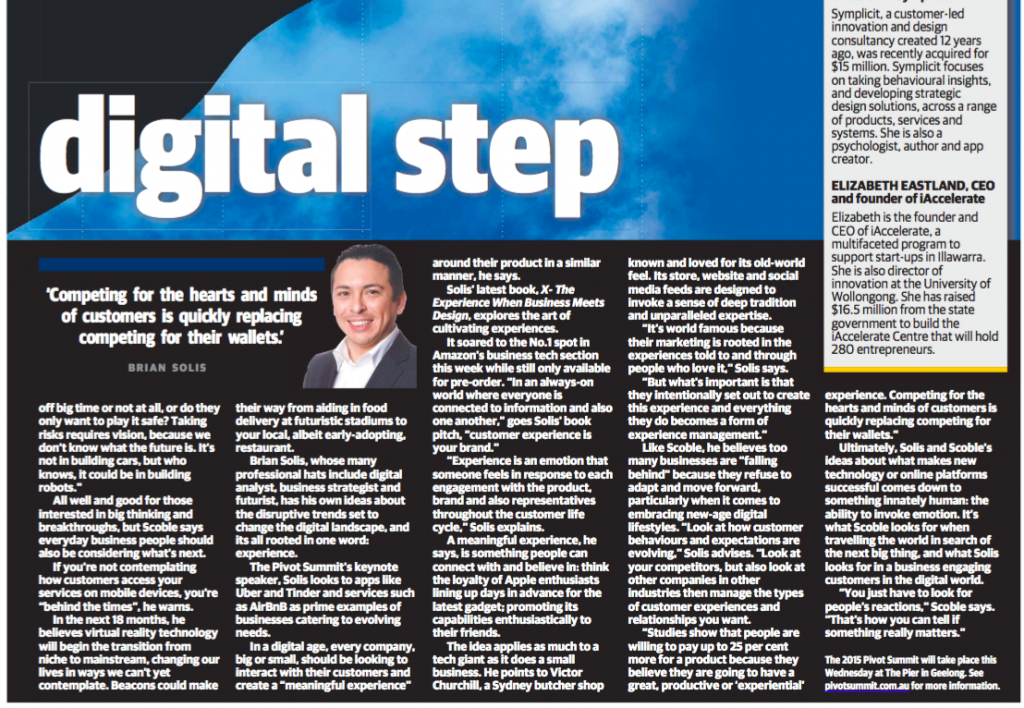
It’s been a bit of a whirlwind since the launch of X. In the last two weeks, I’ve hosted conversations about the promise of experience design in London, Düsseldorf, Oslo, Sydney and Geelong. Somewhere along the Atlantic, I was asked to answer a few questions ahead of my arrival in Geelong for the Pivot Summit by Courtney Crane of the Geelong Advertiser. Thanks to the magic (or curse) of inflight wifi, I was able to make her deadline. But it…
I’m Pivoting Toward Growth
Even Pivots make pivots. Such is true for the Pivot Conference. After 5 wonderful years, Pivot is moving away from a traditional conference format toward one focused on “user generated learning experience.” I’m moving into an advisory role and Matt Godson, Mike Edelhart and the Momentum team will carry the Pivot torch proudly. Now it’s time for me to grow. And I’m excited to announce that I’m partnering with my dear friend Debbie Landa on the 2015 GROW conference. GROW is centered on engagement and…
Pivot: The Emergence of Digital Compels Businesses to Transform
Guest post by Mike Edelhart, co-producer and CEO of The Pivot Conference (@pivotcon) Historic shifts in business fundamentals don’t occur smoothly; rather they happen in sudden, sharp shifts which open unexpected chasms companies must traverse or plunge. Today, the deep change in human behavior brought about by the emergence of social media marks the latest such shift, perhaps the most dramatic since the Industrial Revolution. Gone are the traditional success factors of operational efficiency and price advantage being uprooted by…

Pivot: The Total Digital Experience
The Pivot Conference in NYC in October is unique among events in that, each year, it shifts focus to deeply reflect the needs of its community of senior business transformation executives from leading brands and organizations. To make that happen, I serve as Pivot’s Executive Producer along with Pivot CEO, Mike Edelhart. For four years in a row, we’ve put our heads together to develop a story arc that covers the hottest, emergent trends, presented by the industry’s most engaging…
24 Doodles that Visualize This Year’s Pivot Conference Agenda
I’m looking forward to seeing you at next week’s Pivot Conference in New York. We published our formal agenda here. Our friends at doodle.ly though, decided to re-imagine the concept of what an agenda could be by visualizing portions of it as doodles! I hope you love them as much as I do… Click here to see the original gallery. More about our speakers here. I’ve created a story arc around the importance of integrated experiences and digital transformation. We’ve…

Announcing This Year’s Theme and Agenda for the 2013 Pivot Conference: The Total Digital Experience
Companies at the leading edge of change are recognizing that Social isn’t the catalyst for transformation, it is a shift in human behavior that changes everything. Social and its partner in change, mobile, can’t be limited to particular campaigns or even to specific departments. This revolution impacts employees and customers and all parts of the enterprise. There are no boundaries now; everything is integrated. This year at Pivot, we will be exploring topics that reset our perspective of where we…

STUDY: Social Business Strategy – Vision, Purpose and Value drive a new era of digital engagement
In an era when media is largely created and broadcast by the few to the many, social media emerged to facilitate the co-creation of media in addition to creating it. While difficult to trace its origins, the philosophy of social media dates back to the mid-1990s. It wasn’t until the mid 2000s however, that businesses would encounter the idea of a new medium where brand democracy prevailed over brand dictatorship. Suddenly the voice of the customer took on an entirely…
Businesses not Making the Pivot from Lip Service to Social Customer Service [infographic]
Social media changes everything. Marketing, sales, customer service, they’re no longer departments, engagement is now a way of business. As the impact of social spreads through organizations, questions arise about the role social ultimately plays in customer service and overall customer experiences. For the past three years, good friend Brent Leary and the folks at Social Media Today have produced The Social Customer Engagement Index. It examines how companies are using social tools for customer service and, more importantly, how…
Twitter Shifts from Tech Startup to Media Network [Infographic]
The state of the relationship between Twitters and its developer community is nothing short of tumultuous. While there are significant merits on either side of the debate, what’s clear is that the Twitter of yore is no longer on a similar course for what will be the Twitter to come. It’s a sign of maturation and focus. It’s Twitter’s shift from tech startup and media darling to an aspiring new media empire. Ruffling feathers and clipping wings is an unfortunate…
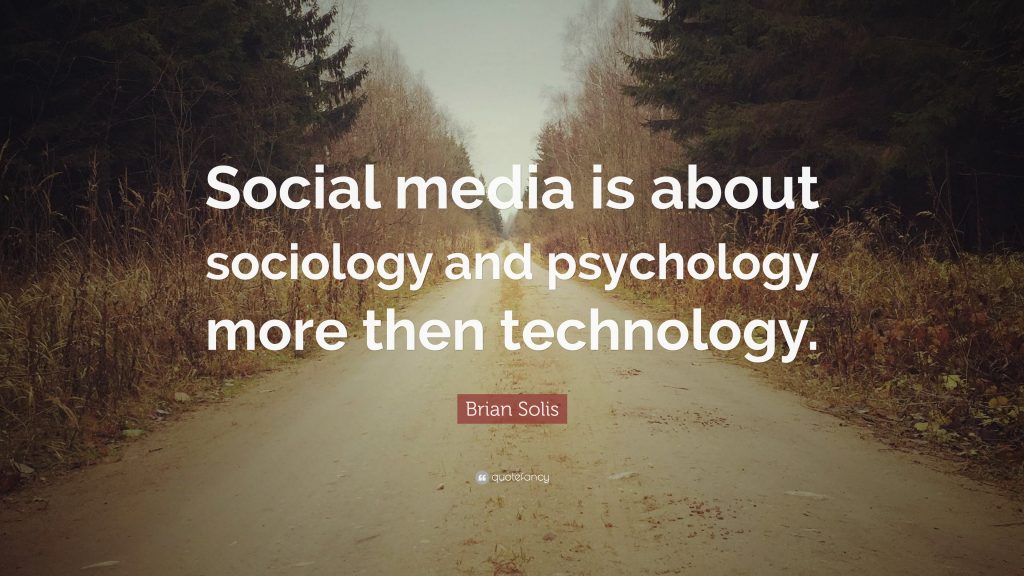
Social media is about social science not technology
In 2007, I wrote an article entitled, “Social Media is About Sociology Not Technology.” It’s a statement that after five years (and counting), I thankfully continue to see shared every day on Twitter. As time passed and experience matured, I amended that statement to now read, “Social media is about social science not technology.” Why did I change such a powerful statement? I believe that it is not only stronger now, it is also truer. See, sociology is just one…