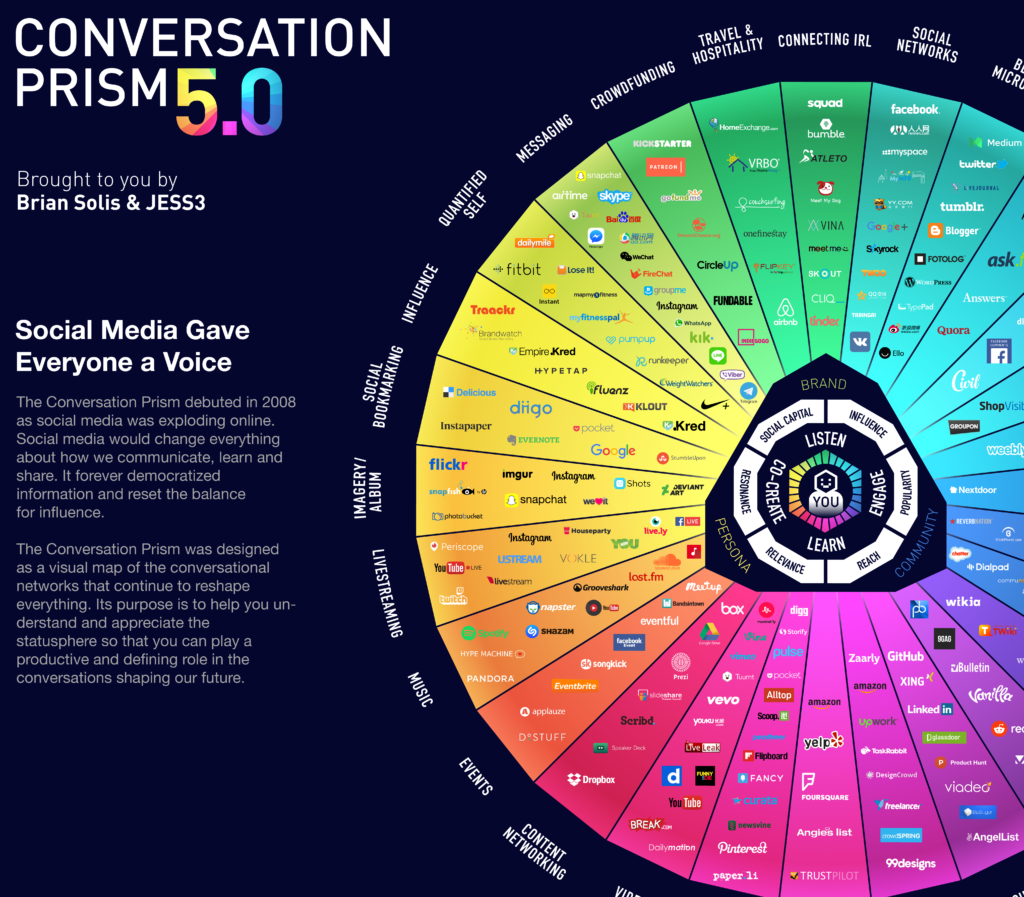
In 2007, JESS3 and I released v1.0 of The Conversation Prism, a map and mental model for navigating the social media landscape at the time. Fun fact: this became one of the first ever viral social media infographics. We would go on to release 4 additional iterations and ship thousands of full-size posters. Who knows, maybe we’ll release the next version one day soon! This is the backstory. Please watch! 🙏 You can find V5.0 here. If you’d like to…
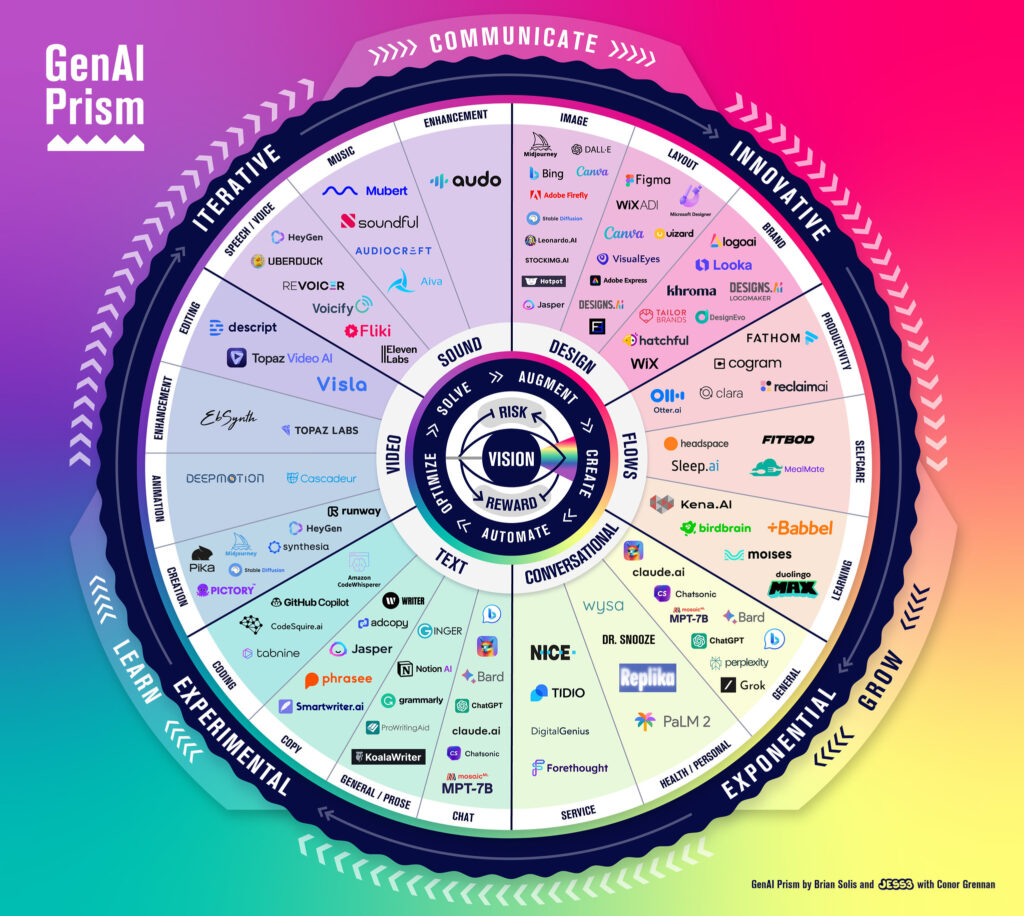
Introducing the GenAI Prism Infographic: A Framework for Collaborating with Generative AI
NEWS: Introducing the The GenAI Prism, the single most comprehensive representation of the generative AI universe. JESS3 design studio and Brian Solis, digital futurist and best-selling author, announced the release of the GenAI Prism v1.0 infographic along with Conor Grennan, leading generative AI expert and Dean of Students/Head of GenerativeAI at NYU Stern School of Business. Jeremiah Owyang, Venture Capital Investor at Blitzscaling Ventures, and my friend and former colleague, shared an observation that there are more than 10,000 generative…
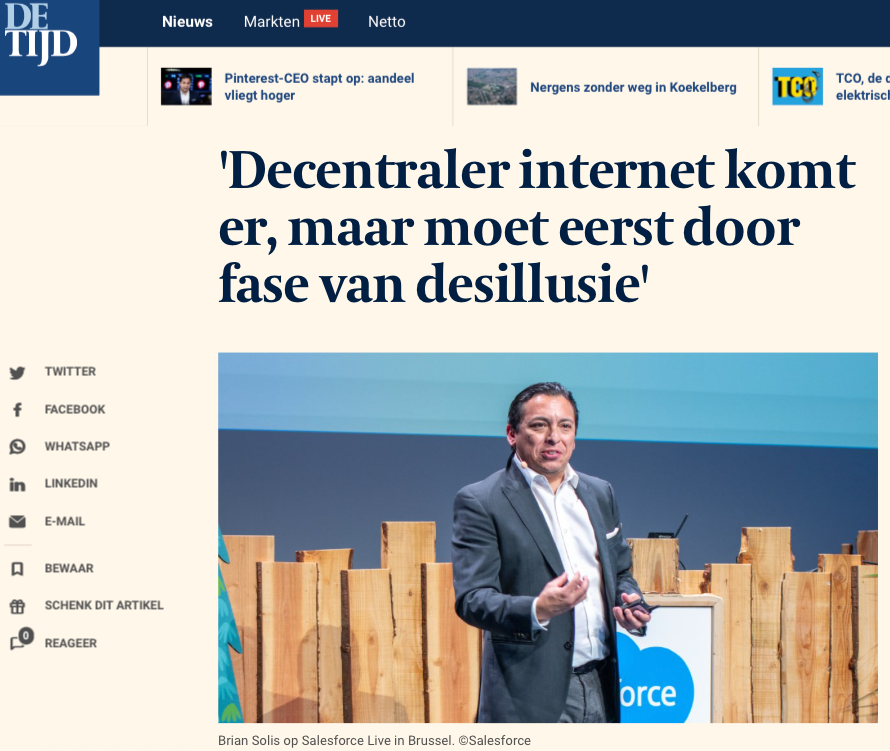
De Tijd: ‘Decentraler internet komt er, maar moet eerst door fase van desillusie’
I had the opportunity to meet De Tijd’s Roland Legrand while in Brussels, Belgium. It was an incredible conversation that I’m sure could have led to a series of articles. Thank you for the honor, Roland. Source: De Tijd De antropoloog en futurist van de digitale wereld Brian Solis is optimistisch over de pogingen het web te hervormen, decentraler te maken en de gebruikers meer macht te geven. Hij waarschuwt wel dat dat zogeheten web3 eerst door een ‘vallei van…
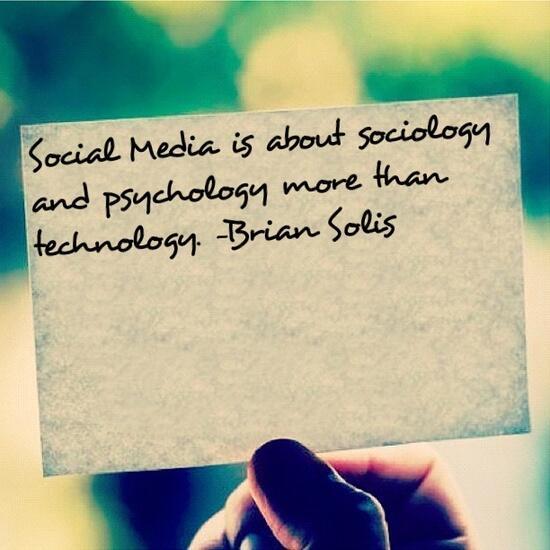
Social is more about sociology and psychology than it is technology
A quote I originally published circa 2007 was recently shared on Caso Cerrado on by the one and only Dra. Ana María Polo. “Social is more about sociology and psychology than it is technology.” Muchísimas gracias, Ana! 🙏
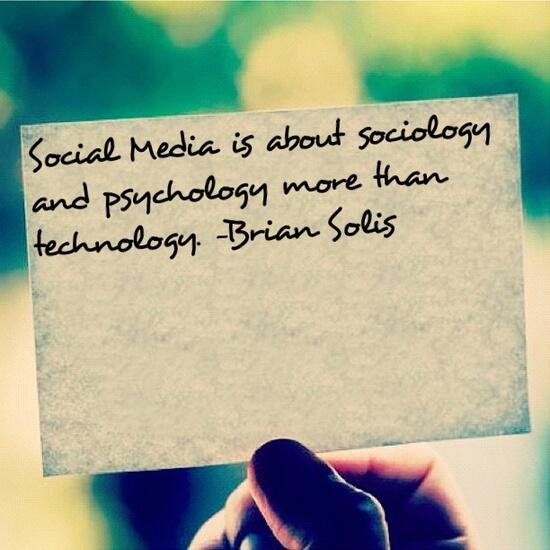
Social Media is About Sociology and Psychology Not Technology
An important reminder… Social media is about sociology and psychology, not technology. Original quote circa 2007. I’ve remixed it over the years to include anthropology and other social sciences. The original idea is what helped to formalize my work into what would eventually become “digital anthropology.” The statement was true then and perhaps, truer now. Source: Google

Five Cybersecurity Experts on Protecting Your Brand on Social Media
via Safeguard Cyber For many businesses, the use of social media and collaboration apps is essential for staying connected to customers and employees alike. From Facebook to LinkedIn to Slack, these apps let us connect on any device and are especially important in the new age of remote work. Every business needs social media. It’s a critical part of transacting in the modern world, whether you’re selling on Facebook or networking on LinkedIn. And while social media is critical to…
Technology as an Ally for a More Sustainable World
España! El Pais de mi madre. 🇪🇸🙌 El mayor experto en transformación digital e innovación del mundo y una de las personas más influyentes en Silicon Valley, Brian Solis, nos habla sobre la importancia de fomentar el pensamiento creativo desde la educación. Además, reflexiona sobre teléfonos inteligentes y cambios conductuales, redes sociales, desinformación, inteligencia artificial y marcas, así como del futuro de la tecnología. An interview with Apple Tree, Spain… The world’s leading expert in digital transformation and innovation and…

It’s Hard to Live Your Best Life When You’ve not Yet Discovered Your Best Self
“Every day, it’s important to ask and answer these questions: ‘What’s good in my life?’ and ‘What needs to be done?’” – Nathaniel Branden Do you ever feel like you can’t keep up with everything? Do you ever feel like you can’t stop trying to keep up? Do you ever feel like if you stop, you’ll lose your relevance or status? Do you ever feel like enough is never enough and too much at the same time? I guess, in…

With Social Media Addiction, AI Algorithms, and Disinformation, the Real Social Dilemma is Ours to Solve: Where Do We Start?
How do we live in a world of constant distraction without giving up these digital tools that monopolize our attention, but provide value at the same time? Is it an all-or-nothing game? These are questions more people are asking as a result of the overwhelming success of the Netflix documentary The #SocialDilemma, which looks at the consequences of driving user engagement through so-called “bubble filter” algorithms, that increase utilization by showing us more of what we’re already watching, insulating us…
The lost art of being present and making important moments matter
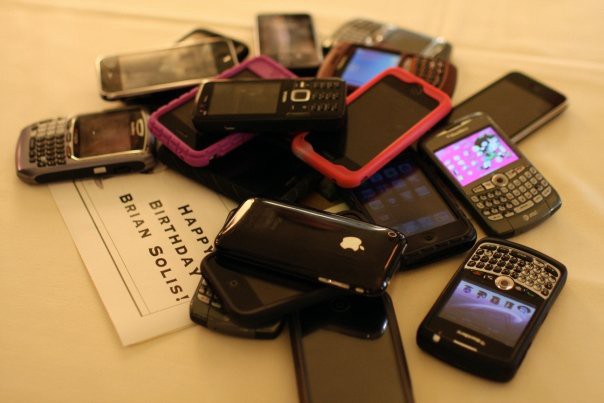
Oh, the irony. Recently on Facebook, I was presented with a memory from nine years earlier. It was a picture from my birthday dinner with a pile of phones strewn across a table. It was almost as if there were a sign that directed people to the table with instructions to leave their phone behind. It was December 8th, 2010 and we were once again in Paris for the annual gathering of the geeks at LeWeb organized by Loic and…