Ester Gritsaeva of fintech blog TheOofy recently wrote an article on the interesting confluence between blockchain technology and social media, quoting from Brian Solis’ public thoughts on the subject.
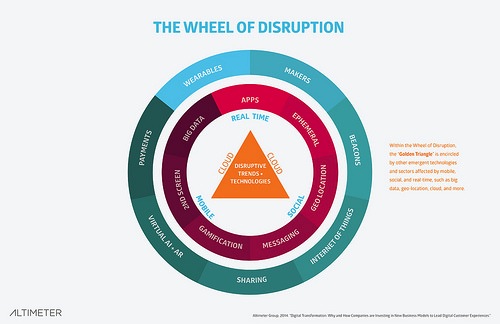
No Jitter: How Not to Become a Victim of ‘Digital Darwinism’
Tim Pickard of Enterprise Connect’s “No Jitter” blog recently did an article on how not to fall behind with the rapid pace of technology, and extensively quoted Brian Solis’ public thoughts on the subject.
MarTechSeries: Leveraging the Power of Social Media to Garner More Customer Reviews
Nivedya Varma of industry publication Marketing Technology Insights recently compiled an overview of advice for companies to use social media to garner more customer reviews, and quoted Brian Solis within the article.
Whatagraph: 10 Fresh Ways To Be More Visible on Instagram
Pam Neely of analytics app Whatagraph.com recently used Brian Solis as a case example, in an article on new ways companies can be more visible on Instagram.

Elaine Fogel: Expert Quotes to Motivate Your Marketing Mojo
Marketing consultant Elaine Fogel recently shared a quote from Brian Solis, one of a series of messages she turns to when needing “validation or a chuckle.”
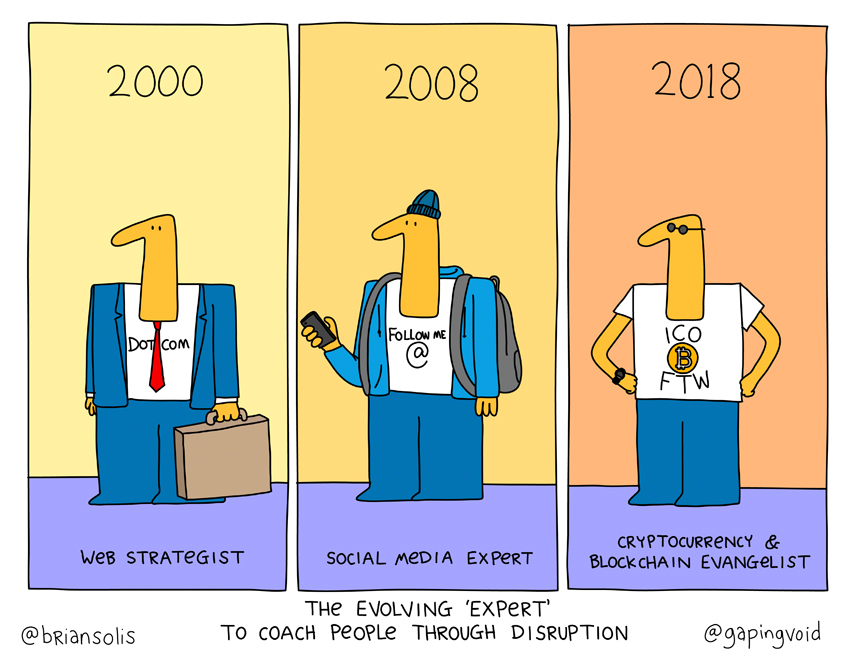
The Rise of Cryptocurrency and Blockchain Evangelists
Have you noticed the shift in focus of the evolving digital expert? We have… The Gapingvoid team and I have collaborated on many projects over the last decade. Our work has focused on prodding executives and entrepreneurs to think differently in their approaches to digital Darwinism and disruption. Whether we’re speaking to startups about the next big thing, attempting to humanize corporate culture and innovation or exploring ways to engage audiences in more meaningful ways, art and story carry our…
Silicon Valley Uncovered: The evolution of tech, media and its impact on society
In 2010, my dear friend Hermione Way invited me as the first-ever guest on her then new show, “Silicon Valley Uncovered” for TheNextWeb. It aired on January 18th, 2011. I share this with you because the conversation, while several years old now, is strangely better suited for today and the modern times in which we live and work. I’m not even sure how I stumbled across this interview. To be honest, I’m taken aback by how prescient and philosophical this conversation…

The technology behind psychographic marketing can be used for good, evil or…advertising
This year, I was given the opportunity to present in Dubai at OMD Predicts, an event that explores the future of media, consumerism and brand. To be honest, it was my first time stepping out of the Dubai airport. In the past, Dubai was only a stop over en route to other countries. Needless to say, I was excited. Following my presentation, I met with Austyn Allison from Campaign Middle East in the lobby of the Westin Dubai Mina Seyahi…
The Past, Present and Future of Social Media
A big part of my work as a digital analyst and anthropologist is to track emerging and disruptive technology trends and study their impact on business and society. In the early 2000s, much of that work was focused on what was Web 2.0, collaboration (office 2.0) and the rise of social media. It was a very special time in my career. I had the good fortune to be in the center of a very important shift in technology and culture….

Social media gave everyone a voice, on the other hand, it also gave everyone a voice
We live in a world where where information and misinformation is prevalent and weighted equally all too often. As human beings, we are learning how to use social media effectively to communicate and connect. At the same time, we’re drowning in abundance, complexity of choices and and unfortunately, the misappropriation or misdirection of influence. Concurrently in professional realms, many leadership teams are overwhelmed with trying to keep up with the sheer scope and scale of the digital evolution. For many…