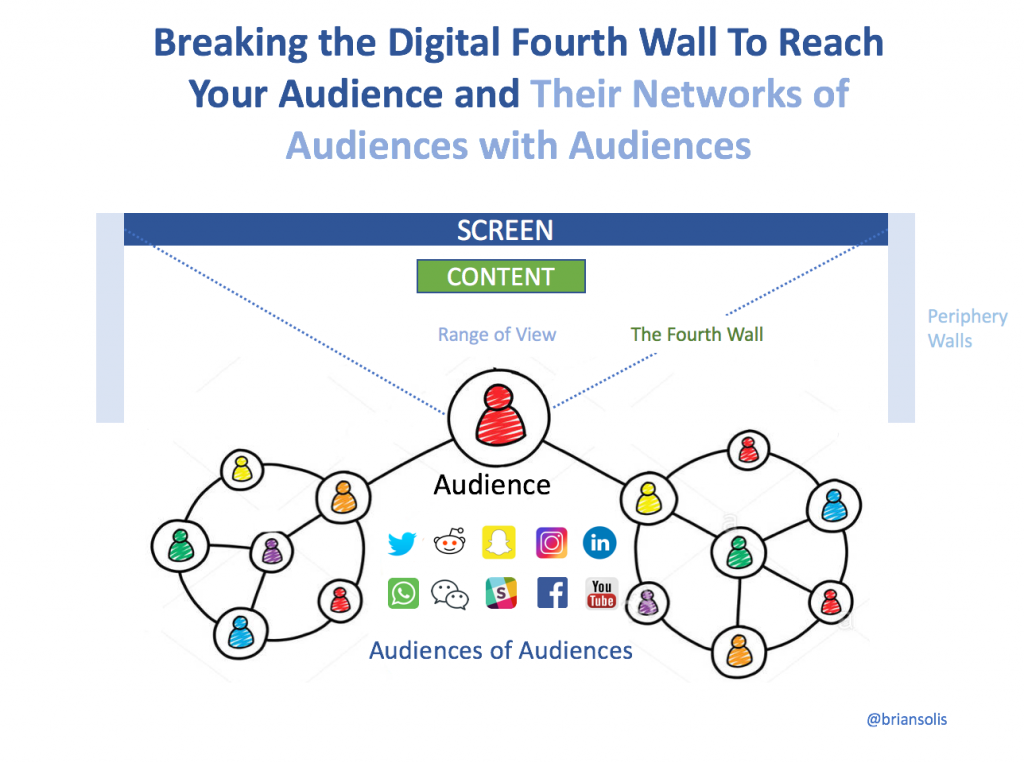
The fourth wall is the space that separates a performer or performance from an audience. A character, actor, author or storyteller “breaks the fourth wall” when they address the audience directly. As an analyst, author, blogger, podcaster and creator, I am by default, in the content business. Dedicating time to produce my work matters not if no one happens upon it. But once someone discovers my work, it must convincingly pierce the fourth wall between the medium and them to…
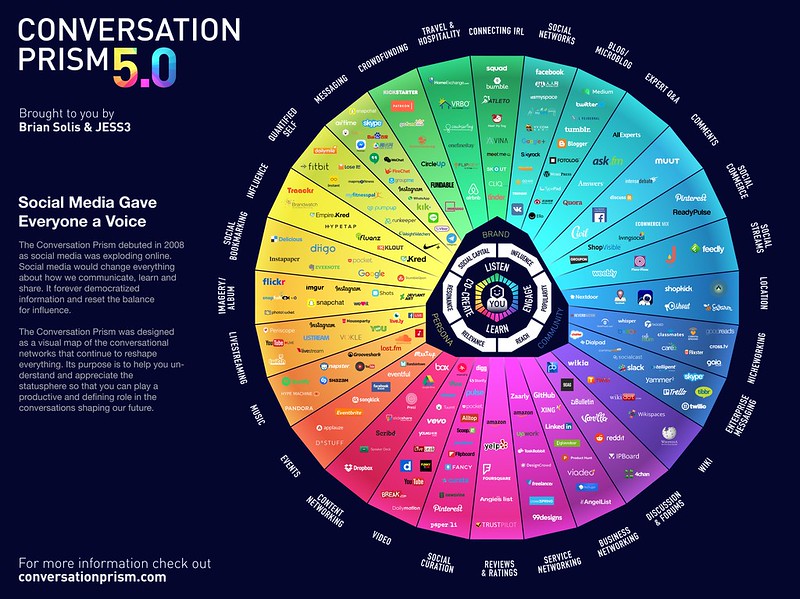
Conversation Prism 5.0: The 2017 Social Media Universe in One Infographic
Social media continues to reshape our world and how people connect, discover and share. While some argue that we should drop “social” from the moniker and simply call it “media,” the reality is that social media is only spreading, evolving and becoming more pervasive in our life and work. Every few years, I partner with JESS3 to capture the state of social media visually. The challenge is always great in that social networks and apps come and go, but over…
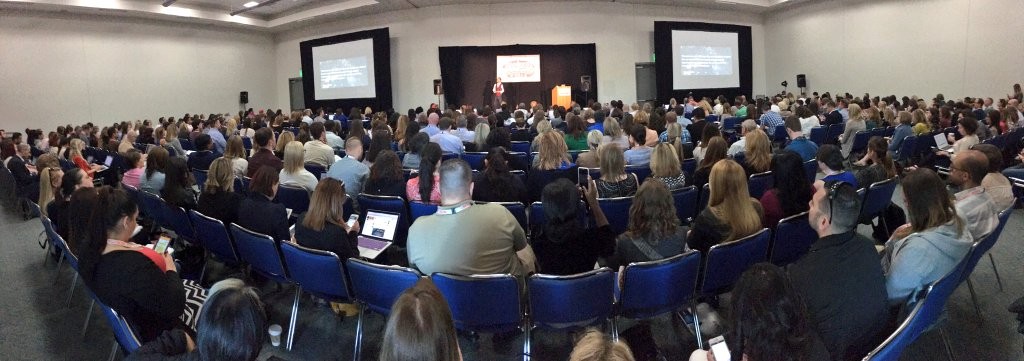
We all talk of innovation, but few us start with innovation in our own work
Photo Credit: Brian Fanzo I don’t normally share things like this, but…I’ve had a heck of a week. On Monday, I released what I would consider my most significant research to date on the subject of digital transformation, “The Race Against Digital Darwinism: Six Stages of Digital Transformation.” I also spent traveled to San Diego (SMMW), Las Vegas (SAS) and Huntington Beach (WCPRSA). Not the most extreme mileage in comparison to previous trips, but each event, was in its own way, unforgettable….
Apple’s Odd, Yet Effective, Social Media Strategy
CIO’s Matt Kapko recently explored why Apple’s social media strategy seems to play the game differently, according to its rules, and not the best practices of everyone else. We talked at length about it now and over the years. This time, I focused specifically on the question about why/why not have an @Apple account. Part of my thoughts made it into the final article, the rest is below for you to see. Excerpt: Apple does social media differently than its…
New Media and the Path to Business Transformation
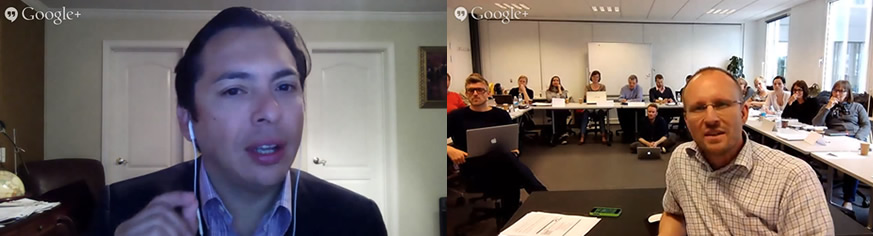
I have a standing offer to all universities (around the world) that use my books as part of the editorial program. I will happily make time to speak to the class to address discuss the material and also answer student questions. In one such case, I joined my friend Kristian Strøbech who teaches budding media professionals at The Danish School of Media and Journalism along with his students for what turned out to be a fantastic conversation. I hope you…
![The 7 Success Factors of Social Business Strategy [INFOGRAPHIC]](https://briansolis.com/wp-content/uploads/2015/04/Altimeter_7Success_Factors_psd-1024x738.png)
The 7 Success Factors of Social Business Strategy [INFOGRAPHIC]
Over the years, my partner Charlene Li and I authored a series of research papers and also a short book on the evolution of social businesses, from philosophy to strategy to practice. Along the way, we also produced an effective maturity model and infographic that documented the six stages of social business transformation. This work would eventually pave the way toward my focus on digital transformation and innovation today. Now, after all this time however, I wanted to share the…

Insights: Interviews on The Future of Social Media as Curated by Anil Dash and Gina Trapani
I’ve long admired the work of Anil Dash and Gina Tripani over the years. In many ways, each has shaped my perspectives in new media and its impact on our professional and personal lives over the years. It came as no surprise that Dash and Tripani collaborated on yet another project. This time, they created ThinkUp, a social media service that offers daily insights about you and your friends on Twitter and Facebook. To celebrate the launch of their latest…

Social Business is the Sum of Social Media Marketing, Social Customer Service, Social Selling and More
Customers and employees are still underserved and underappreciated. Some would say, in business, social media lost its way. Others would argue social media failed to live up to the hype. There are unfortunately still many examples of businesses not getting it, viewing or outsourcing it as a mere “marketing” function, and operating in siloes where social becomes anti-social by design. Without purpose and collaboration, social will always be just another thing that businesses use to defer the inevitable…change. Even though…

ContextMatters Episode 3: Brian Williams, The Future of Social Media + The Anti-Vaccine Movement
Three weeks in and three episodes are now online. Chris Saad and I really got into these topics in the latest episode of ContextMatters. There are parts that are charged and definitely NSFW. We stray a bit away from tech to tackle timely subjects related to journalism and the future of social media as well as the hotly debated topic of vaccinations. Schedule Topic 1: First up is Brian Williams and the controversy surrounding his news coverage in Iraq. We…
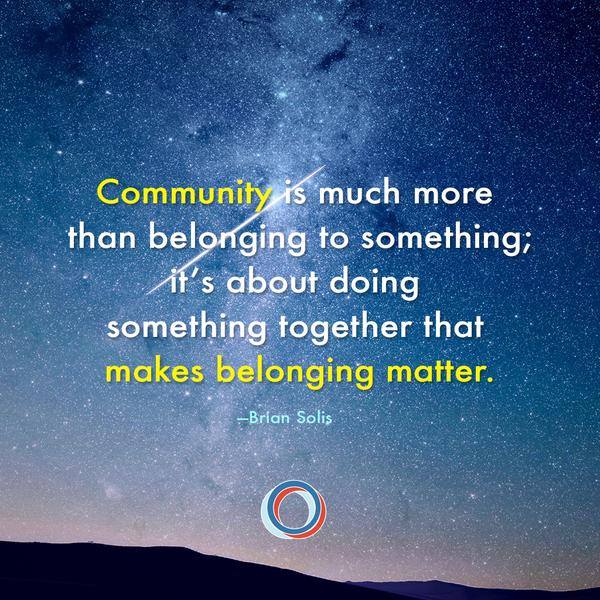
Community is Much More Than Belonging to Something; It’s About Doing Something Together That Makes Belonging Matter
Viginia Coutinho is a dear friend who just released a new book (in Portuguese) that helps strategists think differently about social media. She is also the organizer of Upload Lisboa, a fantastic event in Portugal that focuses on innovation and disruptive technologies. Earlier in the year, she surprised me by asking if I would consider writing the foreword. Even though I don’t write much about social media these days, I couldn’t let her down. Now that her book is available,…