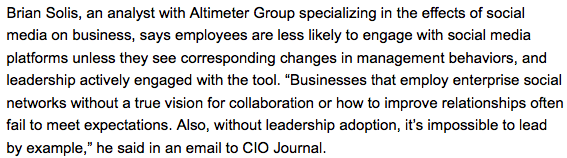
I received an email from my friend at CIO Journal just as I boarded a United flight from Mexico City to San Francisco. He was on deadline and the topic was too good to miss. I’ve spent more than a fair amount of time studying and reporting on the social landscape as it pertained to internal engagement, communication and collaboration.
Thank you for joining me for the 5th episode of (R)evolution, a new series that connects you to the people, trends, and ideas defining the future of business, marketing, and media. In this episode, Michael Fertik, founder and CEO of Reputation Defender, joins the program to discuss privacy and the reasons why you and everyone who matters to you, will be unfairly, but forever judged by what’s online.
Email, we love to hate it, yet we hate to love it. For better or for worse, we are tethered to our inbox and continue to send messages and respond to those individuals and organizations to which we’re tied or vested. Over the years, I’ve labeled email as the world’s largest untapped social network and even though manyservices attempted to socialize the inbox over the years, email, for the large part, remains regressive.
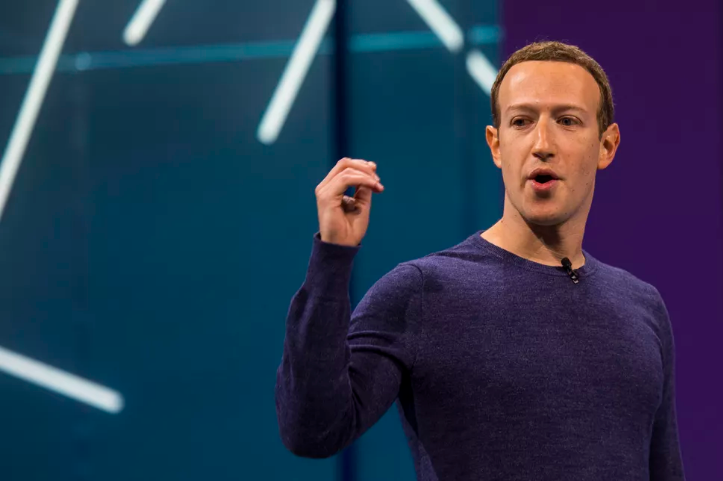
On July 22nd 2010, Facebook officially announced that it had surpassed 500 million users around the world. This significant achievement represents a significant milestone for Zuckerberg and Co. as well as for social networking and more importantly for global societies overall.
To celebrate this achievement, Facebook released Facebook Stories, a new service to spotlight user stories from around the world and the impact Facebook has had on their lives.
In Social Media, we indeed cast digital shadows. We are what we tweet and in the era of equalized influence and democratized digital content distribution, our reputation does in fact precede us. The very tools we use to satisfy our quiet flirtations with vanity as we channel our inner micro celebrity are in actuality the same platforms that can also unravel the fabric of our stature.
Two weeks ago, Facebook submitted its completely redesigned iPhone application to Apple. Today it was released live in the App Store.
As you may or may not already know, mobile Facebook users, as well as those using geo-location networks such as FourSquare and Loopt, are paving the way for the future of Social Networking.
According to Facebook statistics:
- There are more than 30 million active users currently accessing Facebook through their mobile devices.
After running the popular series that evaluated and discussed ThinkFree’s experiment in Social Media, I decided to compile all of the posts into one free and downloadable ebook for your reference.
Jonathan Crow of ThinkFree recently conducted what he calls “The Great Social Experiment,” where he tested the art of online social networking to evaluate whether or not joining the conversation across popular online communities would benefit his company.Crow created a roundtable featuring Chris Brogan, Aaron Brazell, Cathryn Hrudicka, Doug Haslam, and me to offer feedback, constructive criticism, and advice to help ThinkFree and other companies learn from his experiment.
Jonathan Crow of ThinkFree recently conducted what he calls “The Great Social Experiment,” where he tested the art of online social networking to evaluate whether or not joining conversations across popular online communities would benefit his company. Crow created a roundtable featuring Chris Brogan, Aaron Brazell, Cathryn Hrudicka, Doug Haslam, and me to offer feedback, constructive criticism, and advice to help ThinkFree and other companies learn from his experiment.
Jonathan Crow of ThinkFree recently conducted what he calls “The Great Social Experiment,” where he tested the art of online social networking to evaluate whether or not joining the conversation across popular online communities would benefit his company.
Crow created a roundtable featuring Chris Brogan, Aaron Brazell, Cathryn Hrudicka, Doug Haslam, and me to offer feedback, constructive criticism, and advice to help ThinkFree and other companies learn from his experiment.
Brian Solis is principal at Altimeter Group, a research firm focused on disruptive technology. A digital analyst, sociologist, and futurist, Solis has studied and influenced the effects of emerging technology on business, marketing, and culture. Solis is also globally recognized as one of the most prominent thought leaders and published authors in new media. His new book, What's the Future of Business (WTF), explores the landscape of connected consumerism and how business and customer relationships unfold and flourish in four distinct moments of truth. His previous book, The End of Business as Usual, explores the emergence of Generation-C, a new generation of customers and employees and how businesses must adapt to reach them. Prior to End of Business, Solis released Engage, which is regarded as the industry reference guide for businesses to market, sell and service in the social web.
Recent Comments:
June 16, 2013
June 15, 2013
June 15, 2013
June 14, 2013
June 14, 2013