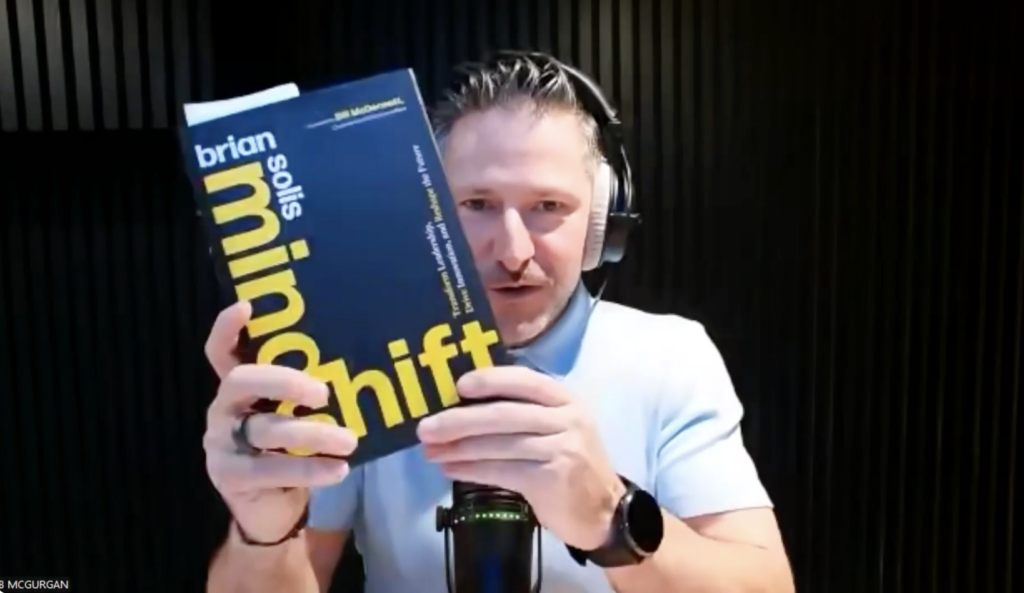
Thank you, Brendan McGurgan. What a privilege to spend time with you. What if the greatest challenge facing leaders today isn’t technology itself — but how we think about it? In this episode of ScaleX™ Insider, Brendan McGurgan is joined by world-renowned digital anthropologist, futurist, and author Brian Solis for a powerful conversation on mindset, leadership, and navigating growth in an era defined by AI, acceleration, and constant disruption. Brian shares why meaningful scale begins not with tools or tactics,…
How to Be Disruptive and not Disrupted – Motivation for Tomorrow’s Innovators
As the fortune reads, “may you live in interesting times.” It’s both a blessing and a curse as interesting implies not only arousing curiosity or catching one’s attention, but also presenting challenging and enthralling opportunities and experiences. Well, we do live in interesting times and every day, I’m studying and living through new experiences and trends to learn, unlearn and grow. But interesting times doesn’t quite describe what’s happening today nor does it properly set expectations for what’s to come….
Experience Innovation – Designing for the X Factor in Customer Experience
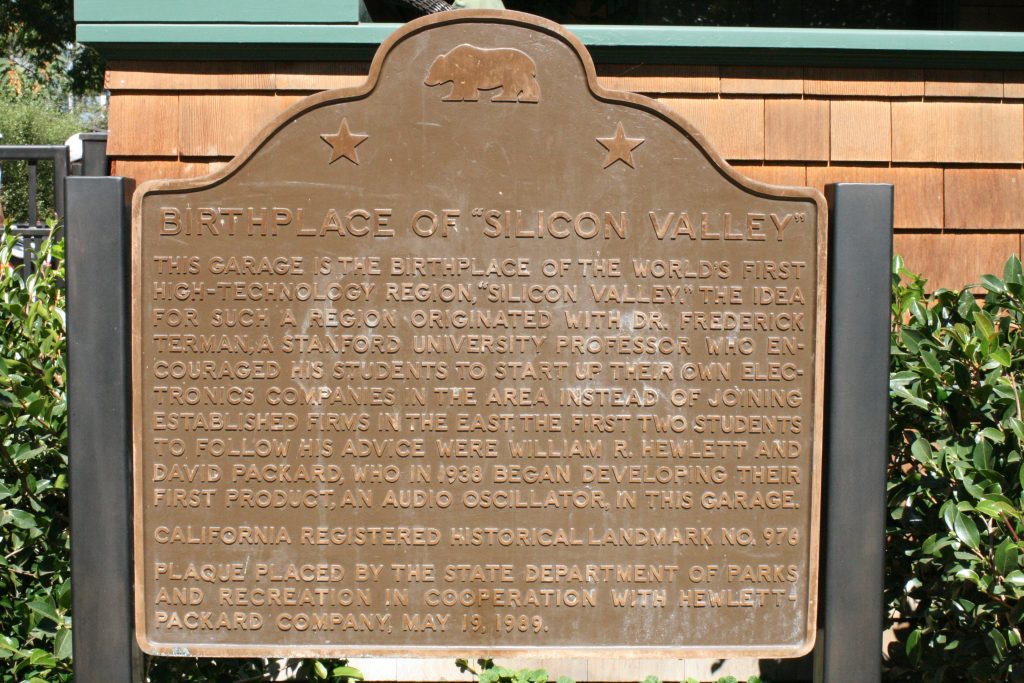
Coming up in Silicon Valley during the 90s and early 2000s was special for a geek like me. I moved to Northern California from LA in 1996. Tech and startups were at the time fledgling in Los Angeles but still exciting. I would later return to help catalyze the startup ecosystem. My goal at the time was to plug into the startup garage capital of the world. By then, there were already storied landmarks that one would have to visit….
Silicon Valley Uncovered: The evolution of tech, media and its impact on society
In 2010, my dear friend Hermione Way invited me as the first-ever guest on her then new show, “Silicon Valley Uncovered” for TheNextWeb. It aired on January 18th, 2011. I share this with you because the conversation, while several years old now, is strangely better suited for today and the modern times in which we live and work. I’m not even sure how I stumbled across this interview. To be honest, I’m taken aback by how prescient and philosophical this conversation…
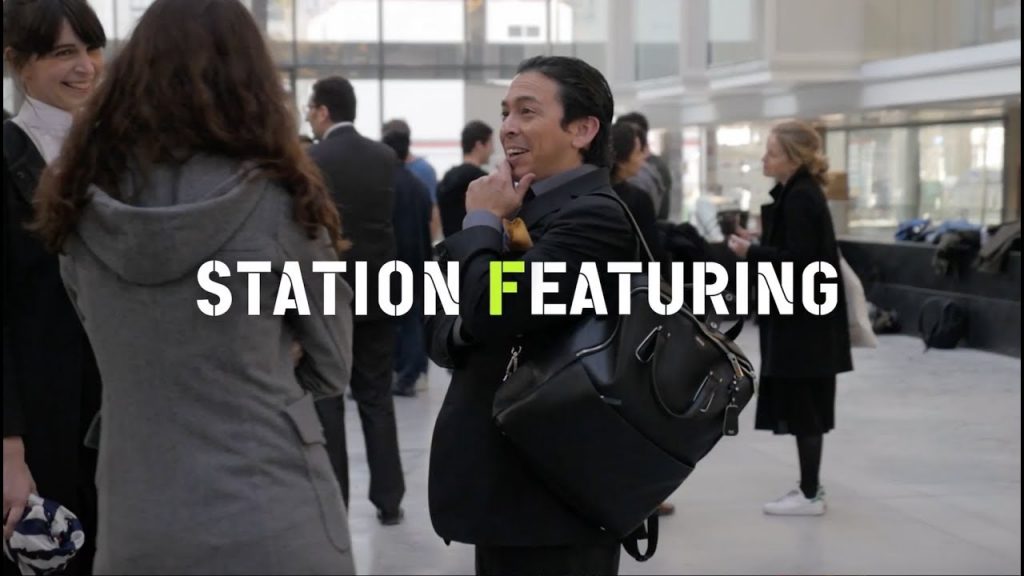
Paris Built a Mini Silicon Valley with STATION F, a Massive Startup Campus Housed in an Abandoned Train Station
you’re a geek, entrepreneur, investor, tech reporter or analyst, startup or all of the above, make the trek to STATION F in Paris. If you could take the best of Silicon Valley and put it in one massive, and I mean massive, connected and glorious campus, it would be STATION F. It is by far, the most ambitious, yet incredibly thoughtful, architecture and assembly for cultivating a startup ecosystem under one roof. The brainchild of French billionaire and Iliad founder…
The Refiners Imports Foreign Startups to Silicon Valley for Global Acceleration
In 2016 I was honored to serve as the first “Godfather” for the Refiners, a group of foreign startups partaking in a new acceleration program in San Francisco. As Godfather, I serve as a mentor and resource to help entrepreneurs shape and optimize their companies to be successful beyond their country of origin. In this case, many of the companies were French hoping to expand to the U.S. and around the world. The Refiners is an interesting take on startup…
The Future of Retail: Stop Iterating and Start Innovating
The team at OneStop invited me to Los Angeles to speak to a wonderful group of digital marketers, etailer/retailer, search and commerce strategists. Among the many things I’m studying and speaking about these days, the future of retail is fascinating to me personally and professionally. The future of retail isn’t just about new technology, the latest gadgets and all of the incredible startups that are pushing retail, commerce and everything else forward. It’s also shaped by connected/mobile customers who are more…
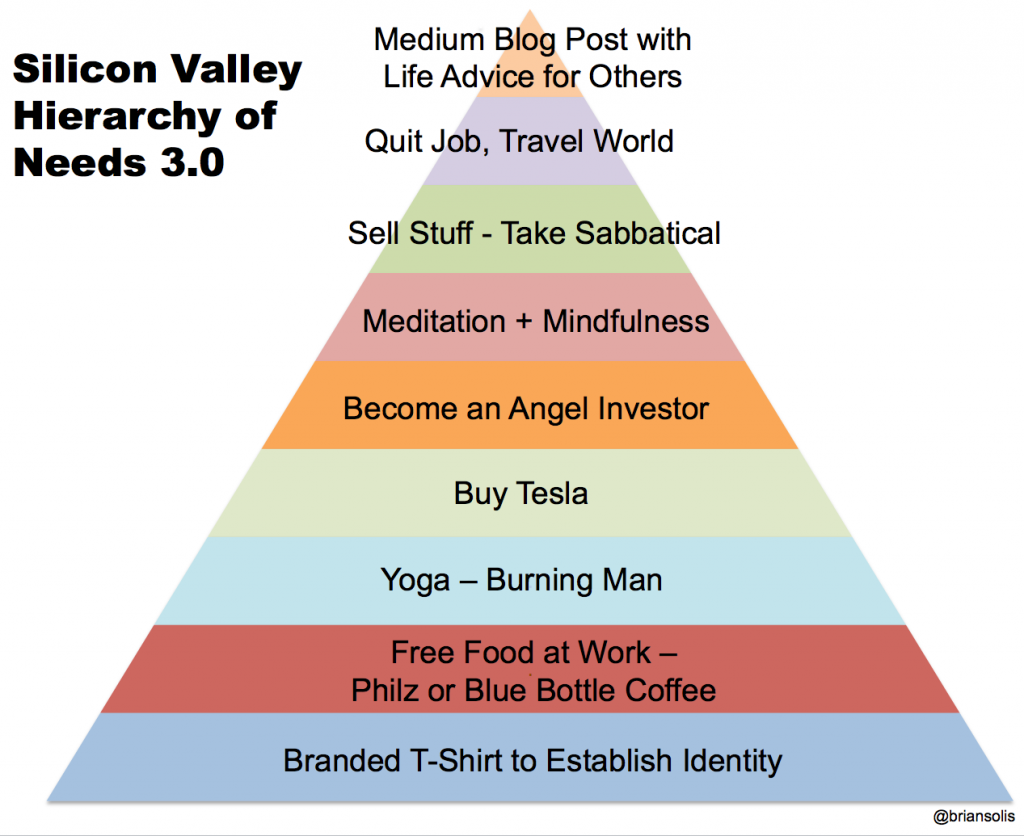
Silicon Valley Hierarchy of Needs
The other day, my friend Loic Le Meur shared a hilarious take on Maslov’s famous Hierarchy of Needs, simply called, “Silicon Valley Hierarchy of Needs.” For many, including me, the list of laughably superficial “needs” of those mocked in Silicon Valley are also a little too familiar or relatable. We all know that person, someone like them, or we’ve seen them characterized in spoofs, TV, movies, books, etc. As a refresher, Abraham Maslov’s Hierarchy of Needs were inspired by his…
Unicorns, Startups, and Giants: The New Billion Dollar Benchmark in Silicon Valley
Silicon Valley is more than a place, it’s a movement. While many debate where the “next” Silicon Valley will gain prominence, the point that many onlookers miss is that innovation is at the heart of the crusade. Whether it’s in the San Francisco Bay Area, Los Angeles, New York, London, Paris, India, et al., innovation is global and its sole purpose is to disrupt our way of life…for the better of course. Just because things have always been done a…
Disrupt or Be Disrupted: Welcome To The Disruption Revolution
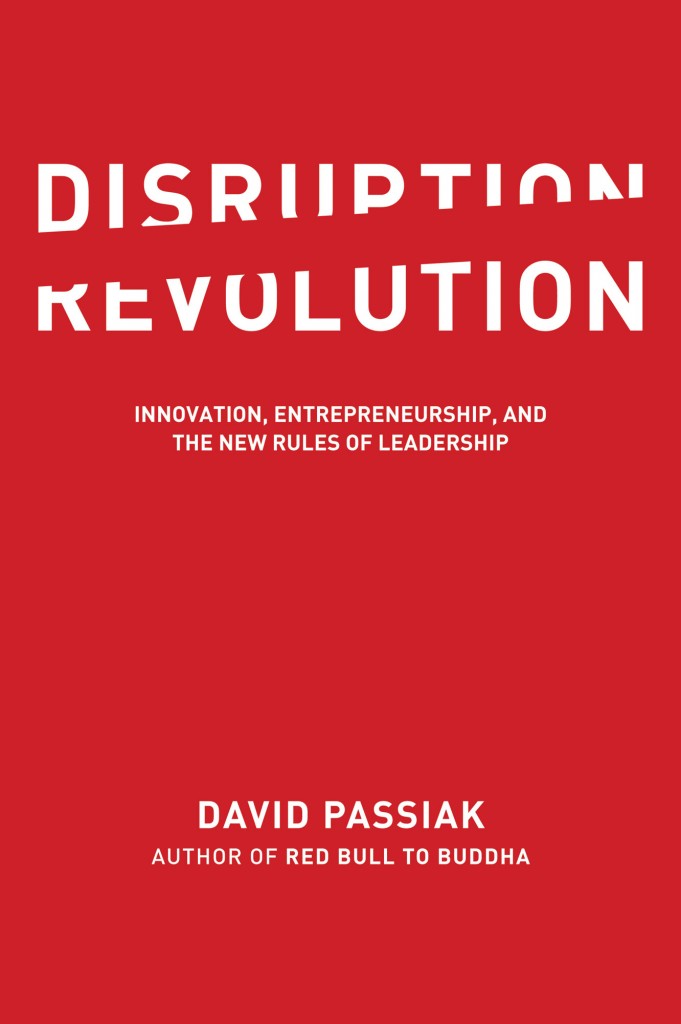
Sometime toward the end of last year, I spent some time with David Passiak (@Passiak), author of Red Bull to Buddha: Innovation and the Search for Wisdom. At the time, he was leading an ambitious project to connect over 20 innovators in the tech startup world and share their perspectives in one, free, book…Disruption Revolution: Innovation, entrepreneurship and the new rules of leadership. The book takes a case study, thematic approach that moves beyond buzzwords and industry jargon [thank goodness]…