Like is the new favorite, which was at the time, was the new bookmark. This small, but important feature will no less, reinforce relationships between friends and followers and those who produce, interact with, and share content.
Made popular by services such as FriendFeed, and now Facebook, the idea of liking an update is much bigger than merely bookmarking or favoriting (yes, it’s a new verb in the social web) updates from friends and contacts for later reference. The act of liking is quickly emerging as a simple, but complimentary gesture of acknowledgment and reciprocation to recognize the contribution of someone whom you follow.
FriendFeed
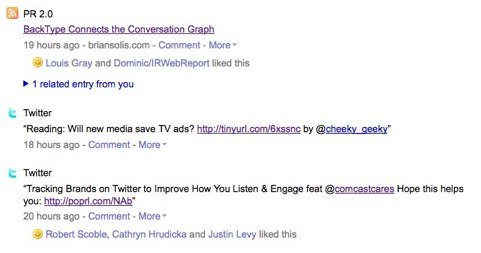
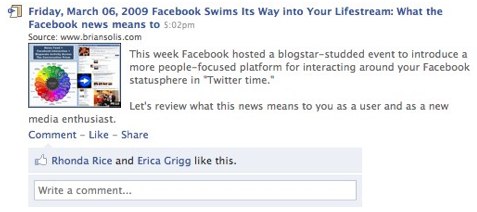
As Robert Scoble notes, FriendFeed is Facebook’s R&D; department. Recently, Facebook introduced the act of liking updates directly into the personal, and precious, News Feed a.k.a. the Statusphere.
New services and communities are also debuting based on the premise of liking. Likaholix, for example, builds a community around reciprocity and those who actively like relevant material.

Likaholix fuses bookmarking and the kindness of liking with influence. It creates a layer of “tastemakers” around those topics and fields in which users emerge as experts based on their consistent, themed contributions and activity within the network.
Liking is the epitome of the relationship-based culture powering the authenticity, ethics, and reciprocal interactions on the Social Web. It’s a powerful form of micro recognition, which serves as an approving, motivating, and uplifting nod from someone else.
Likes also offer a macro impact within social networks. The deed of liking an update resonates within and outside the social graph as those who follow your activity will now receive an introduction to something that caught your attention, thus amplifying the source post or update to span across the relevant net as well as the network of friends of friends (FoFs).
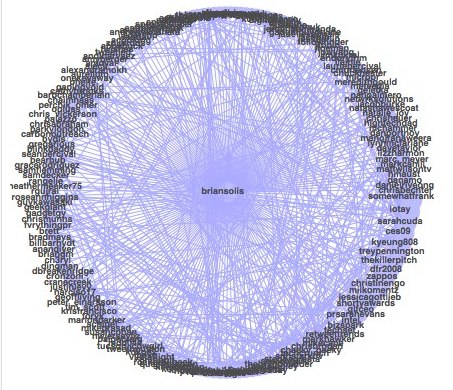
As the social Web and new services continue the migration and permeation into everything we do online, we’re endlessly faced with an increasingly thinning state of continuous partial attention (CPA). It’s affecting how and what we consume, when, and more importantly, how we react, participate and share. That “something” is forever vying for our attention and relentlessly pushing us to do more with less driven by the omnipresent fear of missing out on what’s next. However, the act of liking is a symbol for how we can still publicly appreciate updates and those behind them without carving out precious time to formally comment or bookmark them in external networks.

Source: Andreina
Likes are incredibly powerful as they facilitate the sharing of love in byte-sized actions that reverberate throughout social networks, resulting in a formidable network effect of movement or diversion. It is the digital curation of relevant content that binds us contextually. Liking sets the stage to introduce not only new content to new people, but also facilitates the forging of new friendships in the process.
How does this change how you discover and share updates and content?
Connect with Brian Solis on:
Twitter, FriendFeed, LinkedIn, Tumblr, Plaxo, Posterous, or Facebook
—
Click the image below to buy the book/poster:
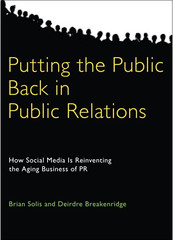

pr pr+2.0 pr2.0 public+relations marketing advertising interactive social+media socialmedia brian+solis social media media2.0 media+2.0 2.0 smo social+media+optimization marcom communication publicity advertising expert interactive spin brand branding guru social+architect



I LOVE this.
Fascinating. Our need to acknowledge eachother in the social web consistently increases with the growing Dunbar number. Yet, what is considered an act of acknowledgement seems to be shrinking or so much less than what it was just a year or two ago (like bookmarking or reposting). You have a great blog. Thanks for sharing the knowledge.
I ‘like’ this but will it turn into a kudo type thing where people are ‘hearting’ their friends and not relevant and useful content, therefore losing its value?
Thanks for posting, great content as always.
I like the idea of giving people ‘kudos’ for a great insightful update or posting link that is beneficial…
I just wonder whether this can be ‘gamed’ in anyway in the same way I have seen groups of people bookmark keyword loaded pages from multiple social networking sites. The pages all have links pointing to one website or page that matches the long-tail keywords and sells the ‘matching’ product…
Just a thought!
Karl
Great post! Thanks for the interesting read and useful advice 🙂
Lee.
@Brian – A great analysis about emerging culture. Spot on. I think you’ve hit on an important cultural trend. “Liking” publicly is the new blog comment. I wrote about the evolution of the RT and hit on some similar points a few months ago. I think the shift from “commenting on blogs” to “providing commentary via microblogging” with links back to the post is an important one to watch. It’ll definitely be more important as individuals’ audiences get bigger over time. Our shared consciousness about content “in Twitter-Time” seems to be the next big evolutionary step in, not just how we read, but how status is determined online.
The link to my “evolution of the Retweet” post is in the URL field.
Again, good post. i enjoyed this. very insightful.
Great article! ilikeucoz (ilikeucoz.com) has been following (and being part of) this trend too – but love the way you've captured it in your headline 'Emerging Culture of Micro Acts of Appreciation with Macro Impact.' Check out http://ilikeucoz.wordpress.com to see what we've been saying about this trend.
Is the ‘on-click’ action of ‘liking’ measureable (as in “this update got liked more than that update”) or does it become another boart of an already comlex engagement metric?
Thanks for another great read 🙂
Like it
DaraBell
The like as a micro action is an interesting concept in the world of non profits. There's a concept that my colleague shared with me called, “foot in the door” test whereby if you get someone to commit to something small, they are much more likely to commit to something bigger. A group of testers went door to door and asked people whether they would be willing to place a sticker in their window about the importance of driving safely. They then went back to the same people and asked if they would be willing to stick a huge billboard in their front yard with the same message. The folks that had said yes to the sticker were much more likely to say yes to the billboard…).
Very interesting!
The like as a micro action is an interesting concept in the world of non profits. There's a concept that my colleague shared with me called, “foot in the door” test whereby if you get someone to commit to something small, they are much more likely to commit to something bigger. A group of testers went door to door and asked people whether they would be willing to place a sticker in their window about the importance of driving safely. They then went back to the same people and asked if they would be willing to stick a huge billboard in their front yard with the same message. The folks that had said yes to the sticker were much more likely to say yes to the billboard…).
Very interesting!
The 'foot in the door' technique is just the first from a whole series of techniques (observed from daily life or lab-tested and developed since the 60s) that proved the capacity of psychological influence in charitable contexts. You can also search the 'foot in the mouth' technique, the 'lowball' or the 'script' one. They are also very effective and they can also be combined!